Coinalyze is not a crypto exchange, broker, wallet, or custody platform. It is a market-data and derivatives analytics service aimed at traders who want to watch futures open interest, funding rates, liquidations, volume, and price action across multiple exchanges. That distinction should shape every judgment about it. You do not deposit coins at Coinalyze, buy bitcoin from Coinalyze, or wait for Coinalyze to settle an order.
Its natural competitors are closer to Coinglass, TradingView, Velo Data, and exchange-native analytics pages than to Coinbase or Binance. Coinalyze's value lies in bringing fragmented derivatives information into one workspace. For a trader studying whether a rally is backed by expanding open interest, whether funding is overheated, or where liquidations are clustering, that consolidation can be genuinely useful. It is a research tool, and a fairly focused one.
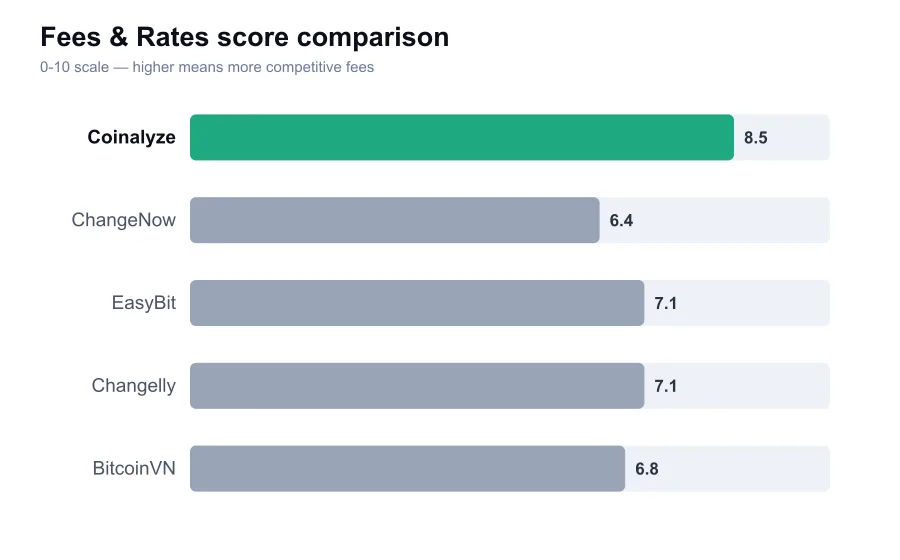
The fee picture is therefore unusually favorable. Coinalyze has offered substantial market data and charting functionality without asking users to pay exchange-style trading commissions. Basic access has historically been free, while advanced access, alerts, data limits, or API-related usage may be governed by a paid plan or specific service conditions. Pricing can change, so professional users should check the current plan page rather than relying on an old comparison article.
Free does not mean costless in a trading sense. Analytics can encourage overtrading if a user mistakes an interesting metric for a reliable signal. Funding rates, open interest, and liquidation figures are contextual data, not a buy or sell command. A trader who pays no subscription fee but acts on every apparent squeeze setup can lose far more than someone paying for a premium terminal and trading selectively. Coinalyze supplies information, not judgment.
Speed is one of the service's central selling points. Derivatives traders need data that is close enough to real time to be actionable, particularly during rapid liquidations. Coinalyze presents live or near-live market updates sourced from supported exchanges, but it is not an execution venue and cannot guarantee the latency of an exchange's own matching engine or websocket feed. For discretionary analysis, the responsiveness is generally useful. For latency-sensitive automated strategies, direct exchange feeds are the more serious choice.
The platform's charts are where it becomes more than a simple leaderboard. Traders can inspect price, volume, open interest, funding, liquidations, and other derivatives-oriented measures across a range of symbols and venues. Seeing these series together can expose conditions that a spot-only chart hides. A rising price with falling open interest, for example, may tell a different story from a move supported by aggressive new futures positioning.
There is still a data-quality caveat that experienced traders understand. Open interest methodologies, contract specifications, quote currencies, and reporting conventions differ between exchanges. Aggregated figures are useful, but they are not always perfectly comparable without checking the underlying market. A perpetual contract margined in USDT is not identical to an inverse contract, and a sudden data gap may reflect an exchange feed issue rather than a market event. Coinalyze users should retain a healthy suspicion of any single dashboard number.
Security is much less of a custody question here than at a trading platform. Coinalyze does not need users to hand over private keys or maintain a crypto balance on its servers. That sharply reduces the catastrophic risk associated with exchange hacks or bankruptcies. The important account-security concerns are ordinary web-service issues, protecting login credentials, using a unique password, and understanding what any API connection or alert integration can access.
There is no standard trading-account KYC because Coinalyze does not execute trades or provide fiat services. An account may be useful for saved layouts, alerts, or subscriptions, but it is not the same as opening a regulated exchange account. This is a clear advantage for researchers who want market visibility without submitting identity documents. It should not be read as an invitation to bypass the KYC rules of any exchange used to place the actual trade.
Coinalyze has built a respectable niche reputation among derivatives-focused crypto traders. It is not as universally recognized as TradingView, and it does not have the broad public profile of Coinglass, but the product has been useful for people who care about open interest and liquidation analysis. Its standing comes from utility rather than celebrity branding. That is often a good sign in trading software, although it also means the community and learning resources are smaller.
Support is functional rather than luxurious. Documentation, contact options, and product guidance can help with account or data questions, but a free or low-cost analytics product is not likely to provide the kind of dedicated response a large institutional terminal does. Traders should not expect Coinalyze support to explain a strategy, validate a liquidation thesis, or compensate them for a missed market move. The platform's job is to display data, not to manage risk.
The biggest mistake new users make is treating derivatives analytics as certainty. A funding rate can remain extreme longer than expected. Open interest can increase before either continuation or reversal. Liquidation heat maps may attract attention, but markets do not have to visit every visible cluster. Coinalyze can make a trader better informed, but it cannot remove the uncertainty that makes leveraged markets dangerous in the first place.
I think Coinalyze is most useful as a second screen beside an exchange and a clean price chart. It works well for someone already familiar with perpetual futures mechanics who wants to test a market narrative against positioning data. Beginners may find the interface compelling but confusing, because the numbers appear precise while their interpretation is often ambiguous. Start by watching how the data behaved in past moves before risking money on it.
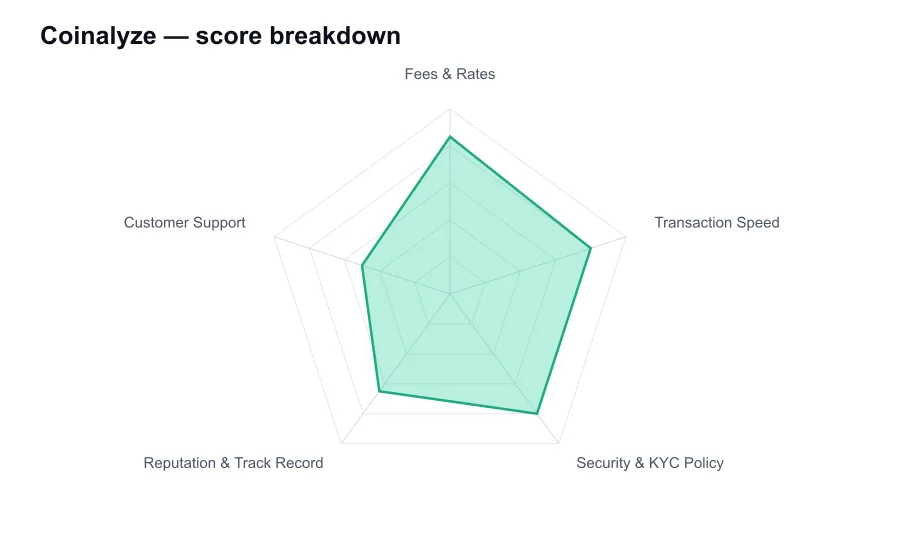
Coinalyze deserves a strong score for accessible analytics and a weaker one for support depth, simply because it is a lean specialist service rather than a full trading institution. Its lack of custody is a major security positive, but users should not project exchange protections onto it because it is not an exchange. For the right trader, it is a valuable lens on derivatives markets. For someone seeking a place to buy, store, or cash out crypto, it is the wrong product entirely.