EasyBit is one of the more recognizable independent instant crypto exchange services. It targets users who want to convert assets directly from one wallet to another without maintaining a trading balance on a centralized exchange. That makes it a practical alternative to platforms such as ChangeNOW, SimpleSwap, StealthEX, and Changelly, although the user experience is closer to a conversion desk than to a full exchange.
The attraction is obvious. Pick the asset you are sending, choose the asset and network you want to receive, provide a destination address, and fund the order. There is no need to navigate candles, limit orders, or a custody dashboard for a one-time exchange. This is particularly handy for people moving between chains or consolidating assets in a self-custody wallet. It is also less forgiving than it looks, because network selection is entirely your responsibility.
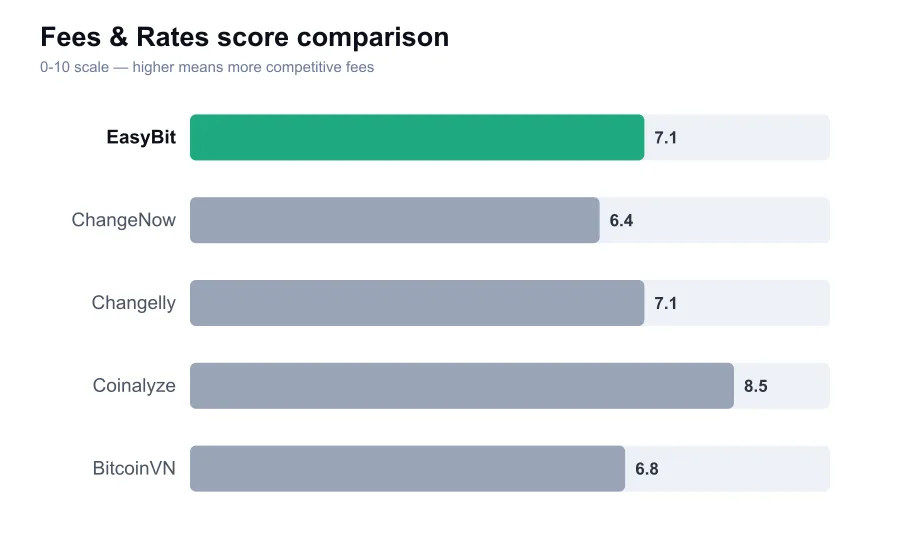
EasyBit's pricing is quote based. Rather than presenting the kind of transparent maker and taker fee table offered by Kraken or Binance, it shows the expected output for the selected route. The cost includes a spread, liquidity sourcing, and network-related expenses. That is normal for instant exchanges. It does mean a customer should stop thinking in terms of a single advertised fee percentage and focus on how much crypto will actually arrive.
The site offers floating and fixed-rate exchange choices for supported routes. The difference matters. A floating rate can give a better result in a stable market, but the final amount can change as the market moves and as the inbound payment is confirmed. A fixed rate offers more certainty for the quoted time window, usually at a different price. For nervous users or anyone converting a meaningful amount, fixed rate is often the more sensible choice.
EasyBit is not always the cheapest route. If you already have a verified account at a large exchange and can trade and withdraw efficiently, that route will often be less expensive for liquid pairs. EasyBit earns its margin by removing steps and letting users stay in control of their wallets. For a modest conversion, that convenience can justify the difference. For repeated trades or large portfolio rebalancing, the accumulated spread becomes hard to ignore.
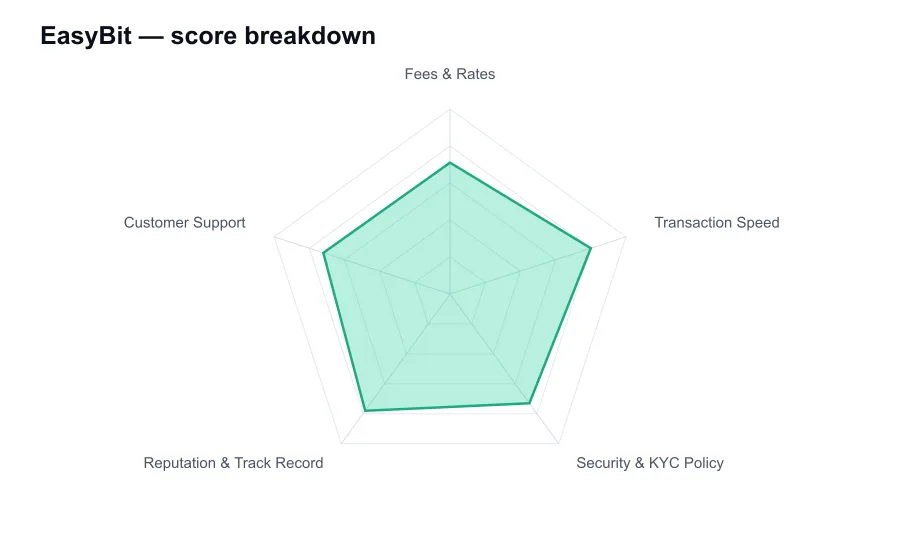
Speed is generally one of EasyBit's better qualities. Many ordinary exchanges can be completed in minutes after the deposit is detected and sufficient confirmations arrive. Faster chains and common stablecoin networks are usually the least stressful choices. Bitcoin, Ethereum during congestion, and transactions sent with inadequate fees are naturally less predictable. Users sometimes blame an exchanger for a delay that began with their own slow or unconfirmed deposit.
The order page and tracking information are important because they turn a vague wait into a visible process. A good instant exchange should make clear whether it is waiting for the deposit, waiting for confirmations, processing the swap, or broadcasting the payout. EasyBit's order-based approach is far more useful than a generic completion estimate. Once an outbound transaction hash is available, the remaining delay is usually a network matter rather than an EasyBit matter.
There are still limits to the instant-exchange model. EasyBit may rely on liquidity partners and can encounter network outages, low liquidity, or transaction reviews. An unusually large or unusual order can take longer than a routine swap. I would not use any instant swap service, including EasyBit, for money that must arrive at an exact minute. For normal personal conversions, though, its speed is usually competitive with its direct rivals.
EasyBit is often described as a no-registration or no-account service for standard swaps. That is a real usability advantage, particularly for users who do not want another exchange account tied to their portfolio activity. But no routine account requirement is not the same thing as an unconditional anonymous service. Its terms and compliance controls can require information when a transaction is flagged by anti-money-laundering procedures or a liquidity partner's screening system.
That policy can irritate users who expect every swap to be automatic, yet it is more honest to recognize the trade-off. A service touching multiple assets, chains, and liquidity sources cannot credibly promise that every incoming transfer will bypass risk controls. The safe assumption is that most conventional wallet-to-wallet swaps proceed normally, while unusual patterns can trigger questions. Do not send funds if a temporary review would create a financial emergency.
EasyBit has a much stronger reputation profile than a new or obscure instant exchanger. It has operated long enough to generate substantial public discussion and third-party feedback, including both positive reports and the inevitable complaints about delayed or reviewed orders. That doesn't make every complaint invalid, but it gives prospective users more material to assess. A service with years of visible activity is easier to evaluate than one that exists only through affiliate pages and anonymous praise.
The company also benefits from being a familiar name in exchange aggregators and wallet-to-wallet swap comparisons. That visibility is not a substitute for regulation or a guarantee against a bad transaction, but it is meaningful. EasyBit has more to lose from persistent poor service than a disposable copycat site does. I still recommend checking current feedback before a major order because service quality can change, especially during extreme market volatility.
Support is available through the service's official channels and is most effective when the customer provides a complete order record. Include the order ID, deposit transaction hash, sent amount, chosen network, and receiving address. Expect a proper agent to distinguish a missing deposit from a confirmation delay or an order under review. That sounds basic, but it is the practical difference between usable support and a scripted chat response.
EasyBit is one of the better choices in the instant-swap category, provided you understand what that category is. It is not a low-fee trading exchange and it is not a bank. It is a convenient conversion layer that keeps the user in wallet control for much of the process. For a routine swap, particularly one involving a supported fixed-rate option, I would trust it ahead of lesser-known services. For high-volume trading, the math still favors a large exchange with lower execution costs.