Sanctum sits in a particularly Solana-native corner of crypto: liquid staking, but with an ambition to make every Solana liquid staking token behave like cash. Rather than asking users to choose one dominant LST such as JitoSOL, mSOL or bSOL, Sanctum built infrastructure that lets many of them trade through a shared liquidity layer. Its flagship Infinity pool is the point of the exercise. Deposit a supported LST, swap into another, or exit to SOL without needing to hunt through separate liquidity pools.
That sounds like plumbing, and much of it is. But it solves a real annoyance for Solana users. LST fragmentation is expensive. A user may receive a niche validator LST, want JitoSOL for collateral, and discover that the direct market is thin or nonexistent. Sanctum tries to turn that awkward chain of swaps into one transaction. For users who move among Solana DeFi protocols often, that convenience is not trivial.
The product is also closely tied to Sanctum's own LST ecosystem. It has powered creator coins and validator-linked LSTs, including its earlier Wonderland incentives and the INF token launch. That gave it visibility quickly, though it also means the brand has been shaped by airdrop farming culture. Some users arrived for points and token rewards rather than because they needed a sophisticated staking liquidity venue. That is common in DeFi, but it can make organic liquidity harder to judge once incentives cool.
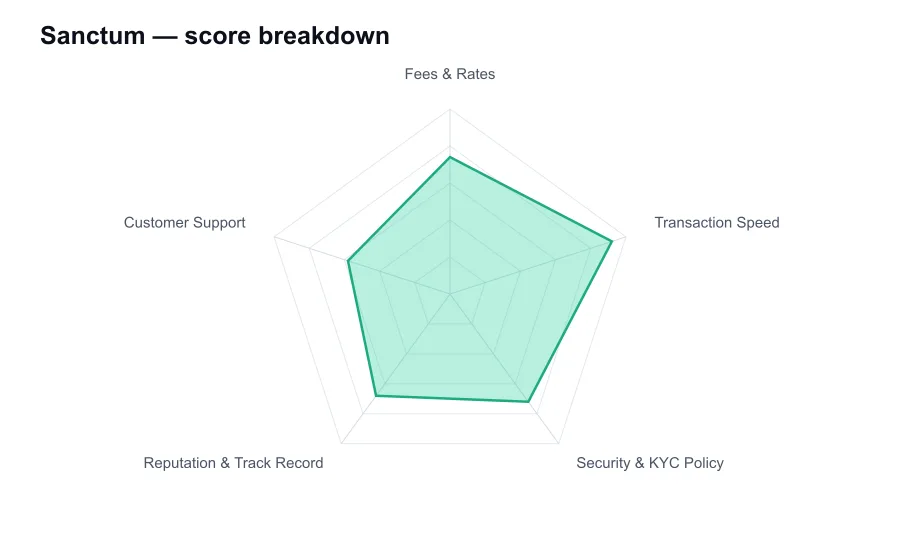
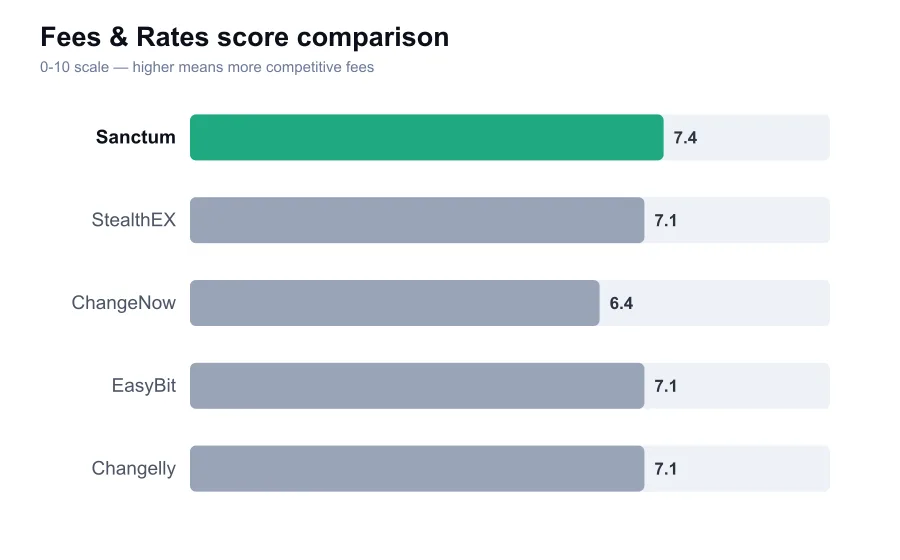
Fees need to be read carefully here. Sanctum does not present one simple, permanent retail fee like a conventional exchange. The cost of an instant unstake or LST swap can be dynamic, influenced by pool composition, available liquidity and the underlying LST. In favorable conditions the effective cost can be very low. If the pool needs the asset you are depositing, a trade may even be unusually attractive. If you are withdrawing the asset everyone wants, the price can be meaningfully worse.
That model is economically sensible, but it makes Sanctum less transparent than a fixed-fee venue. A user should look at the quoted output before signing, every time. The visible quote is more important than marketing claims about cheap swaps. There are also the underlying validator commissions and Solana network fees to consider. Network fees are generally tiny, but validator commissions reduce staking yield over time and differ by LST.
For straightforward SOL staking, Sanctum may not be the cheapest route. Native staking avoids liquid-token trading costs, although it involves activation and deactivation delays. Large users can also compare direct liquidity on Jupiter, Orca and Raydium. Sanctum earns its place when a swap between LSTs is inconvenient elsewhere, or when instant access to SOL is worth paying for. It is a liquidity utility, not a magical source of yield.
Speed is one of its strongest practical qualities. Solana transactions normally settle within seconds, and an Infinity swap is designed to be immediate rather than tied to the multi-day waiting period of stake deactivation. In a normal network environment, users see the result almost as soon as their wallet confirms. That is a sharp contrast with native unstaking, where an epoch boundary can leave funds unavailable for several days.
The limitation is capacity. Instant liquidity is only instant while the pool can provide it at a reasonable price. During severe market stress, an LST depeg or a rush for native SOL, the quote may deteriorate sharply. A transaction can still settle quickly, but quick settlement at a poor rate is not the same thing as a good exit. Sophisticated users should distinguish operational speed from liquidity depth.
Sanctum is non-custodial. It does not require standard identity verification to connect a Solana wallet, stake or swap through the protocol. That is attractive to users who do not want to hand over personal documents merely to manage staking positions. It also means the user bears the usual self-custody burden: protect the seed phrase, inspect transaction prompts, and do not assume a polished interface can reverse a mistake.
The larger security question is smart-contract and liquidity risk. Sanctum has used audits and publishes security material, but an audit is not an insurance policy. A flaw in protocol code, an integration problem, or an issue affecting an underlying LST can still cause losses. The protocol also depends on Solana's performance, validators, oracle-adjacent market pricing, and the health of the LSTs it accepts. A diversified interface does not eliminate the underlying stake and validator risks.
Its reputation is promising rather than settled. Sanctum became one of the more visible Solana DeFi projects in 2024, attracted serious liquidity attention, and has credible technical relevance in the LST market. Still, it has a much shorter operating record than Marinade or Jito, and vastly less historical testing than Ethereum liquid staking leaders. I would not treat a successful incentives campaign as equivalent to years of crisis performance.
Support is mostly community-led through Discord, documentation and social channels. That works for technically comfortable Solana users, especially those who can provide a transaction signature and describe the issue precisely. It is not the kind of support model that gives a newcomer confidence after sending funds to the wrong address. There is no conventional account desk, chargeback process or phone line, because there are no conventional accounts.
The interface is approachable, though the concepts behind it are not always beginner-friendly. Users need to understand the difference between staking yield, LST exchange rates, pool quotes and token incentives. Someone who just wants to stake SOL for the first time may be better served by a simple native-staking guide or a well-known single-LST provider. Sanctum becomes compelling after that basic education, not before it.
My view is that Sanctum is useful infrastructure with a real product-market fit, especially for active Solana DeFi users holding less common LSTs. Its speed and flexibility are excellent. The trade-off is that pricing can be dynamic, the protocol is still relatively young, and support remains firmly in the crypto-native lane. Use it for efficient LST mobility, but do not mistake instant liquidity for risk-free liquidity.