Swapuz is a newer instant-exchange brand that tries to compete on breadth, speed, and a deliberately simple no-account flow. It sits in the same broad category as ChangeNOW, SimpleSwap, StealthEX, and LetsExchange, but it has a less established name than those larger competitors. The site is built for a quick conversion, not for chart watching, leverage, or maintaining a long-term exchange balance.
The service supports a wide range of crypto assets and pairs, including mainstream coins, stablecoins, and many smaller tokens. That is useful for portfolio cleanup and cross-chain conversions that would otherwise require several separate trades. It also means that availability can be fluid. A listed asset does not always mean deep liquidity at every hour, especially for thin tokens or networks undergoing maintenance.
Swapuz's interface is uncomplicated. Pick what you send, pick what you receive, enter the recipient wallet, and fund the generated deposit address. The order page provides the status trail. This design lowers friction, but it should not encourage carelessness. Users still need to verify the chain, token standard, memo requirements, and destination wallet compatibility before the first confirmation is broadcast.
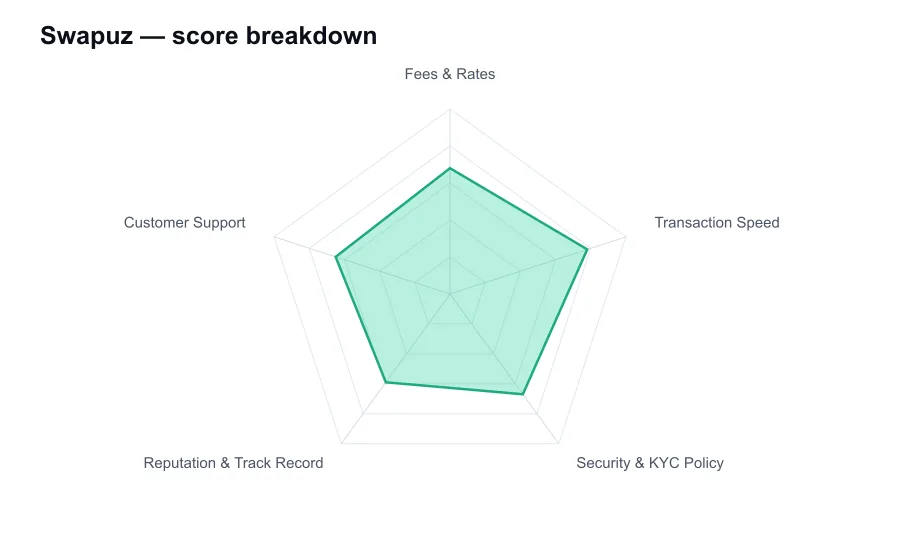
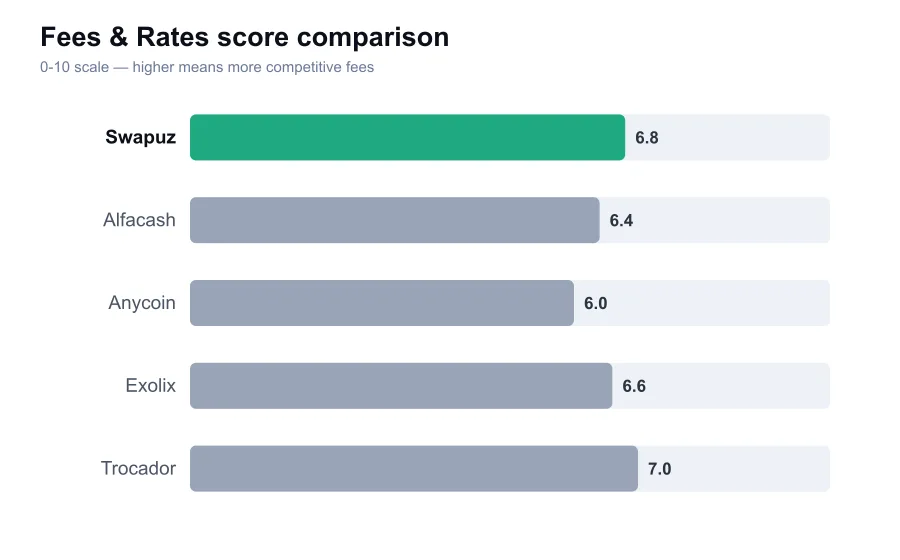
Its fees are quote-based rather than published as a transparent flat percentage. The displayed output reflects the liquidity provider's market price, network cost, and Swapuz's margin. That is normal for an aggregator-style service, but it gives the operator a lot of room to vary execution economics by pair. A quote can look excellent on one route and mediocre on the next.
I found the fairest way to evaluate Swapuz is to compare the exact received amount against alternatives at the same time. For major assets, it can be competitive enough that the convenience premium is modest. For less liquid pairs, it may not be. Users who see a familiar token name and assume an efficient market are making a mistake. Token liquidity is not evenly distributed, and instant exchanges charge for solving that fragmentation.
Fixed-rate and floating-rate choices are central to the pricing decision where available. Floating quotes may produce a better expected rate but expose the sender to market movement between quote creation and exchange completion. Fixed quotes cost more because someone is absorbing that volatility risk. If the transaction is large enough that a changing output would be painful, fixed execution is usually the more sensible choice.
Speed is one of Swapuz's better qualities on straightforward transactions. Transfers on fast networks can complete in minutes, while Bitcoin, Ethereum congestion, or additional confirmation requirements naturally slow things down. The service cannot outrun a blockchain. Any platform advertising instant swaps is describing its own processing layer, not promising that every chain will suddenly settle instantly.
The gap between an ordinary order and an awkward one matters more than marketing pages suggest. A deposit made below minimum, sent on the wrong network, or missing a required memo can require manual recovery. That is where a young platform gets tested. Swapuz provides tracking and support channels, but there is less accumulated evidence about how consistently it handles rare edge cases than there is for veteran competitors.
The standard swap flow does not require an account, which is attractive to people who don't want another password database or custodial profile. That does not make Swapuz anonymous in every circumstance. The operator may apply transaction monitoring, and it can request KYC documentation if a transfer triggers compliance checks. That policy is not unusual, but it should be understood before funds are sent.
There is a security advantage in not leaving a standing balance on the platform. Swapuz sends the purchased asset to the address supplied for a particular order, so there is no reason to park funds there. Yet the service has custody during processing and may rely on third-party liquidity sources. The right mental model is not trustless exchange. It is a temporary, convenience-oriented intermediary with fewer account-level protections.
Swapuz's reputation is its most obvious soft spot. It has user feedback and a functioning public presence, but it lacks the lengthy operating history and broad independent coverage that make older providers easier to assess. A newer service may be perfectly competent, but time is what reveals operational resilience. It reveals whether support responds during chain outages, whether refund policies work, and whether pricing stays fair under stress.
That does not mean users should dismiss it. It means they should size transactions according to the evidence available. Testing with a small conversion is sensible on any instant exchanger, but especially sensible here. If the first transaction arrives promptly and the rate matches the terms, repeat use becomes more reasonable. Sending a major portfolio position before testing the mechanics is simply bad risk management.
Support is advertised as available around the clock through chat and email. For basic order-status questions, that is the expected baseline and appears adequate. More complex recovery issues may depend on response quality, transaction evidence, and whether a liquidity partner is involved. Keep the exchange ID, screenshots of the quote, deposit hash, and wallet address. Those details turn a vague complaint into something support can investigate.
Swapuz is strongest as a flexible utility for users who already know how to manage their own wallets. It is not trying to win over professional traders, and it shouldn't be judged as though it were Binance or Kraken. The relevant question is whether it delivers a clean conversion at a fair net price. On many common routes it can, but the lack of a long public record means I would keep expectations and transaction size disciplined.
My verdict is cautiously positive, with the caution doing real work. Swapuz has a straightforward product, a broad catalog, and the kind of account-free workflow many crypto users prefer. It has not yet built the same level of trust capital as the category's older names. Use it for sensible, checked swaps, compare the output before funding, and don't confuse a slick interface with a guarantee of frictionless resolution.