Ripio is one of the more recognizable crypto brands in Latin America, with roots going back to the region's early Bitcoin economy. Founded in Argentina in 2013, it has survived several very different crypto cycles, local currency crises, and regulatory shifts. That longevity matters. Ripio is not merely a checkout widget or a recently launched token app. It is a regional financial-technology business built around buying, selling, storing, and using crypto.
Its strongest argument is local relevance. Ripio has served customers in markets where inflation, capital controls, and limited access to foreign currency have made stablecoins and Bitcoin more than speculative curiosities. The company has expanded beyond Argentina into other Latin American markets and has developed business-facing products alongside its consumer wallet. It understands the practical demand for USDT, USDC, and dollar-linked exposure in a way many global exchanges only understand from a distance.
The consumer app is approachable, sometimes almost too approachable for users who need precise execution. Buying crypto is simple, and the app can make local-currency conversion feel like a standard fintech transaction. But Ripio is primarily a broker-style experience, not an exchange where a customer studies the order book and chooses their own bid. The rate displayed matters far more than a headline promise about low fees.
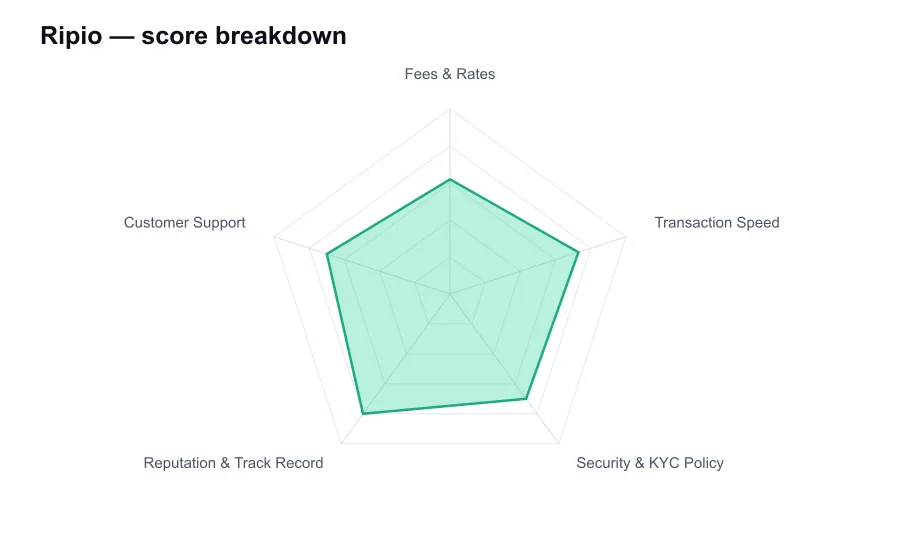
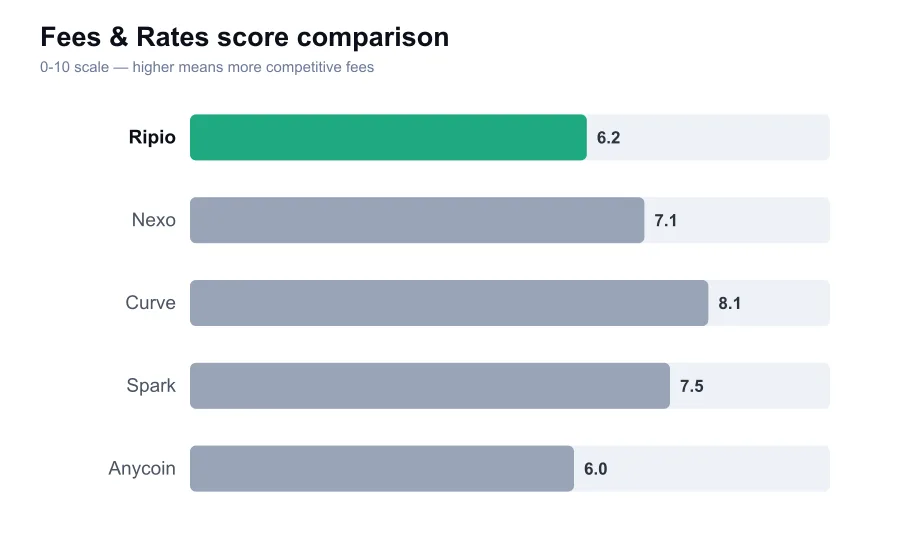
Ripio has historically charged trading costs through spreads and has also published fees that vary by product, market, and payment method. That is common in retail crypto apps, but it makes cost comparison less tidy than on an exchange with a flat maker-taker schedule. A new user should never assume a zero-fee marketing message means zero economic cost. Check the amount of crypto received, then compare it with the prevailing spot rate and any transfer charge.
For modest purchases, Ripio's pricing can be acceptable because the app removes several operational headaches. Local deposits, local language, and access to stablecoins can be more valuable than squeezing out the last basis point. For repeated purchases or large conversions, spreads deserve scrutiny. A difference that looks trivial on one transaction becomes expensive across dozens of purchases. Sophisticated users may prefer a venue with transparent order books, then use Ripio only where its local banking connections are useful.
Deposit and purchase speed is usually one of Ripio's better qualities, particularly where it supports instant local payment rails. Crypto balances can update quickly once funds are recognized. Bank-transfer timing, maintenance windows, and compliance reviews still apply, of course. Like every platform dealing with fiat, Ripio cannot make a traditional bank transfer settle on a weekend if the bank itself does not move it.
Withdrawals need more patience. A request can be approved quickly, but external blockchain settlement is governed by the chosen network, fee conditions, and security screening. Stablecoin transfers on efficient networks may arrive relatively quickly. Bitcoin and Ethereum withdrawals can take longer during congestion. Before sending a large amount, test the destination with a small transfer. It is boring advice, but it prevents a bad address mistake from becoming permanent.
Ripio's security posture has the normal strengths and weaknesses of a centralized wallet provider. It provides a managed account, which is convenient for people who do not want to protect seed phrases, but it also means the company is part of every access and withdrawal decision. Users should enable two-factor authentication if available in their market, secure their email account, avoid SMS-only security where possible, and review active sessions and withdrawal details regularly.
KYC is a core part of the relationship, not an occasional obstacle. Ripio operates with local fiat rails and is expected to identify customers, apply transaction limits, and monitor suspicious activity. Basic verification can be quick, while larger volumes may trigger requests for additional documents. That is frustrating if a customer expects the anonymity of early Bitcoin culture, but it is consistent with Ripio's effort to function as a mainstream regional financial service.
The company has invested in regulated and institutional-facing directions, including Ripio Select and services tied to blockchain infrastructure. Its purchase of Brazil's BitcoinTrade in 2021 and its expansion across the region showed ambition. It has also been associated with the development and promotion of the RCN token ecosystem. These initiatives demonstrate that Ripio is more than a simple wallet, though token projects should be judged independently from the reliability of the core brokerage service.
Reputation is where Ripio earns a clear advantage over smaller local competitors. More than a decade in operation is meaningful in an industry where many firms do not survive two years. It has raised institutional capital and built recognizable brand awareness in Latin America. That does not remove custodial risk or guarantee that every support case goes smoothly. It does make Ripio easier to take seriously than an unknown provider with no public history.
There are still valid complaints from users of platforms like this: delayed verification, changing limits, slow response during market stress, and confusion about purchase pricing. Ripio is not immune. Retail crypto firms tend to be judged harshly because a delayed answer can coincide with a volatile market, and that criticism is often fair. If access to funds at a precise moment is essential, do not keep all of them in any custodial app.
Support is generally more useful than what customers receive from offshore exchanges because Ripio works in the region's languages and understands local payment issues. Help channels, in-app communication, and published guides cover routine tasks reasonably well. The quality gap appears in exceptions. A blocked deposit or an enhanced due-diligence review can move slowly, and public complaints around those cases should not be ignored. Save evidence and contact support through official channels only.
Ripio is a strong practical choice for Latin American users who need a familiar bridge between local money and mainstream crypto assets. It is not the cheapest venue for a professional trader, nor is it the right place to store every long-term holding. Its age, regional reach, and fiat accessibility give it a better foundation than many local alternatives. Use it for what it does best, then keep serious long-term assets under a custody arrangement you fully understand.