1Mile sits in the small, fast moving end of the online crypto exchange market. It presents itself as a straightforward conversion service rather than a full trading venue, custody platform, or fiat on ramp with a banking brand behind it. That narrow focus can be attractive if the job is simply swapping one asset for another, but it also means buyers should judge it by a harder standard: can they see the rate, understand the conditions, and get help quickly if a transaction stalls?
The service appears designed for users who don't want a charting terminal or an account packed with unfamiliar menus. A simple exchange flow has value. Pick the assets, enter an address, send funds, and wait for delivery. For a modest one off swap, that is often preferable to moving coins into a centralized exchange, placing an order, and then withdrawing again. 1Mile's appeal begins and ends with that convenience.
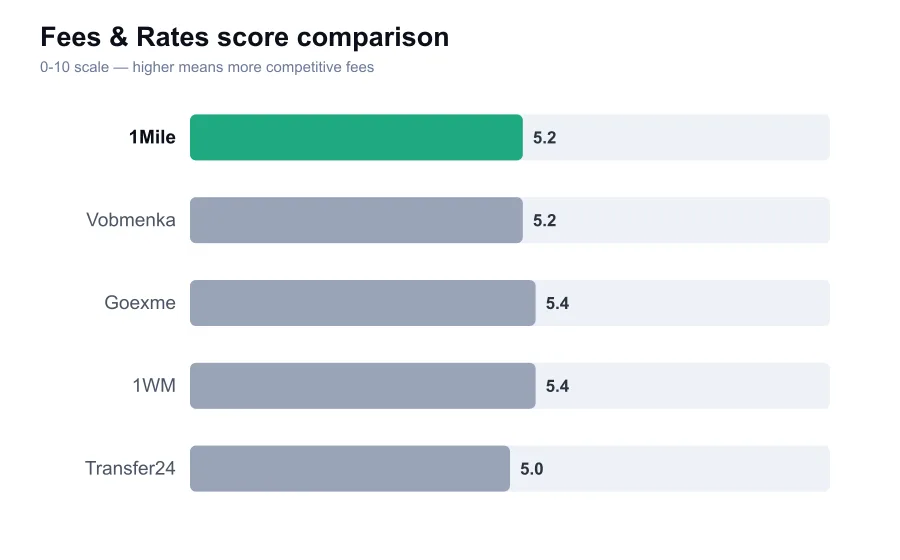
Its biggest weakness is price transparency. A mature exchange can usually point a customer to a published maker and taker schedule, a spread policy, or a clear fixed rate premium. Small instant exchangers rarely work that way, and 1Mile is no exception. The cost is generally embedded in the quote you receive, alongside network fees and liquidity conditions. That isn't automatically unfair, but it makes comparison work essential.
Don't compare only the amount shown before you send funds. Open a quote at 1Mile and at least two established alternatives such as ChangeNOW, SimpleSwap, or FixedFloat, then compare the exact amount due to arrive at the same moment. That exposes the effective spread. The difference can be minor on a liquid BTC to USDT route, but it can become much larger for smaller tokens, thin networks, or routes involving cross chain liquidity.
The rate type matters just as much as the visible output. If a quote is floating, the final amount can change between the time you start the order and the time your deposit is confirmed. During a quiet market that may barely register. During a sharp Bitcoin or Ethereum move, it can turn an apparently competitive quote into an expensive swap. Users should read the order page closely for fixed rate wording, a time limit, and any language allowing a recalculation.
Speed at 1Mile is mostly a function of the blockchains involved and the liquidity provider behind the quote. A swap cannot be completed before the incoming transfer reaches the required confirmations, and no exchanger can honestly bypass that. Simple, liquid routes can settle quickly once confirmations land. Bitcoin deposits, congested Ethereum transfers, and token swaps needing several confirmations are a different story, and impatient users often blame the service for delays caused by the network.
What I would not do is send an urgent payment through a little known instant exchanger without first making a small test. That advice applies especially where there is no detailed public service level agreement or live status page to rely on. A small initial exchange tells you whether the receiving address format, memo requirements, confirmation expectations, and payout timing all behave as expected. It costs a little more in network fees, but it is cheaper than troubleshooting a large transfer.
The privacy angle needs a sober reading. A streamlined exchange flow and a lack of routine account creation do not amount to a promise that identification will never be requested. Crypto compliance screening is now common among liquidity services, particularly where a transaction triggers risk controls or involves a flagged address. A customer who needs certainty about KYC should not assume that any low friction exchange can guarantee it.
That matters because an exchange held for review is where small providers are tested most severely. The important questions are whether the operator explains what is happening, identifies the documents required, and has a visible process for cancellation or return if verification cannot be completed. Publicly available information around 1Mile does not give the same depth of compliance documentation, company disclosure, and formal complaint history that users can examine at major regulated platforms.
Security is also about operational habits, not just whether a website uses HTTPS. A non custodial exchange model reduces the time a platform holds customer assets, which is a genuine advantage over leaving a large balance on a trading platform. Still, it does not remove address poisoning, fake support accounts, cloned domains, or the risk of sending to the wrong network. Verify the domain manually, preserve the order ID, and never accept an address sent through an unsolicited message.
1Mile does not have the long, independently documented operating record of Kraken, Coinbase, or even some of the better known instant exchange brands. That doesn't prove misconduct. It does mean there is less public evidence to draw on when deciding how much money to trust to a single transaction. Reputation for a small exchanger is fragile and difficult to audit, so I would treat it as a service for measured exchanges rather than a primary venue for substantial capital.
Support is likely to matter most when something has gone wrong, not when an order succeeds in ten minutes. Before placing a meaningful swap, I would look for a working contact route, confirm whether the site offers ticket based support, and save all screenshots of the quoted amount and transaction hash. A chat bubble is not enough by itself. What counts is a traceable record and a response that explains the next action rather than merely saying the transaction is being processed.
There are users for whom 1Mile can make sense. Someone making a small, ordinary conversion between widely supported assets may value the lean interface and absence of a heavy exchange account. The same person should be prepared to compare quotes and accept that support and dispute options are thinner than at a major platform. This is not where I would park funds, make repeated high value swaps, or handle money with a hard deadline.
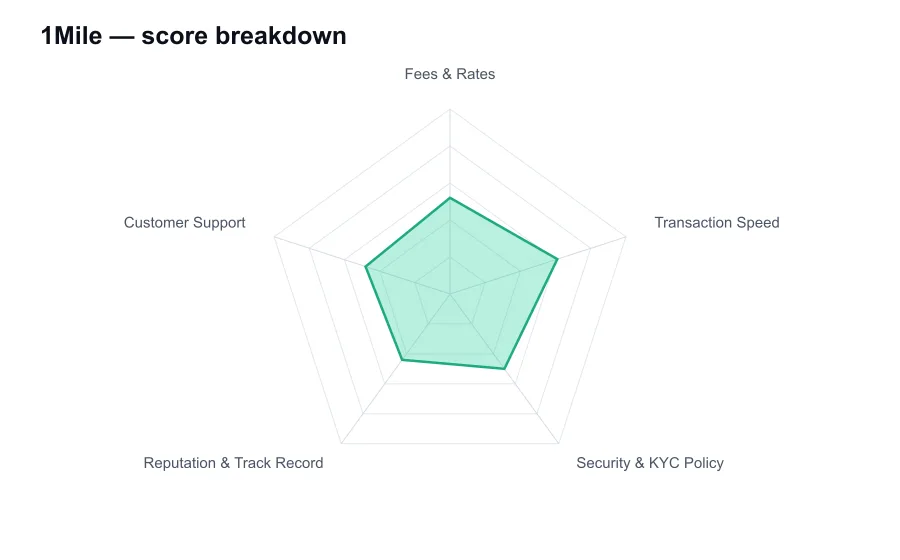
My view is cautious rather than hostile. 1Mile may be useful as a convenience tool if its live quote is genuinely competitive and the transaction is small enough to manage the risk. Its limited public footprint, unclear all in pricing structure, and modest accountability make it a poor choice for users who need institutional confidence. Treat each order as a separate decision, test first, and keep a better established exchange available as your fallback.