Transfer24 occupies a familiar niche in the exchange ecosystem: a compact conversion service aimed at getting value from one currency or crypto asset into another without the ceremony of a full brokerage account. The name suggests speed and availability, which is useful marketing, but it should not be mistaken for a bank grade settlement promise. Services in this category are only as fast as their payment rails, blockchain confirmations, liquidity partners, and manual review process.
The attraction is obvious for users who already understand addresses and networks. A traditional exchange can feel excessive if all you need is a single swap. Registering, waiting for account approval, funding a wallet, trading, and withdrawing creates several points of failure. Transfer24's stripped back model can reduce those steps. It can also reduce the consumer protections, account controls, and disclosure standards that come with a larger venue.
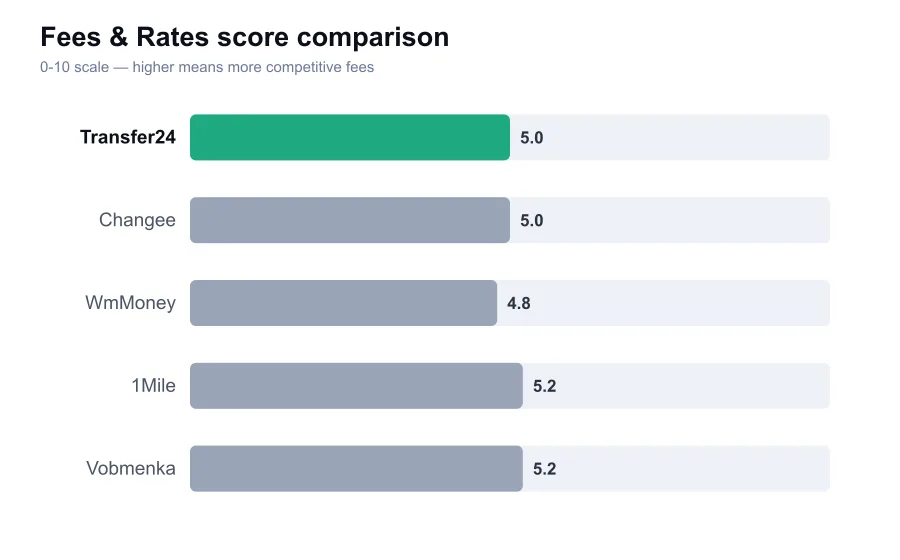
Fees are where a polished checkout screen can mislead people. Transfer24 should be assessed from the final amount that reaches the recipient, not from a headline rate or an initial conversion figure. In instant exchange services, the operator's margin is commonly folded into the rate. There may also be blockchain withdrawal costs, payment processing charges, or a price movement between quote creation and settlement. Those distinctions matter more than a decorative claim about low fees.
I would be particularly careful with exchanges involving stablecoins. People often assume USDT or USDC swaps should be nearly free because the assets track a dollar. That ignores network fees, chain selection, and the provider's spread. A stablecoin sent on Ethereum may carry a very different economic cost from one moved on Tron or another supported network. The cheapest looking route is not useful if the receiving wallet or merchant cannot accept that chain.
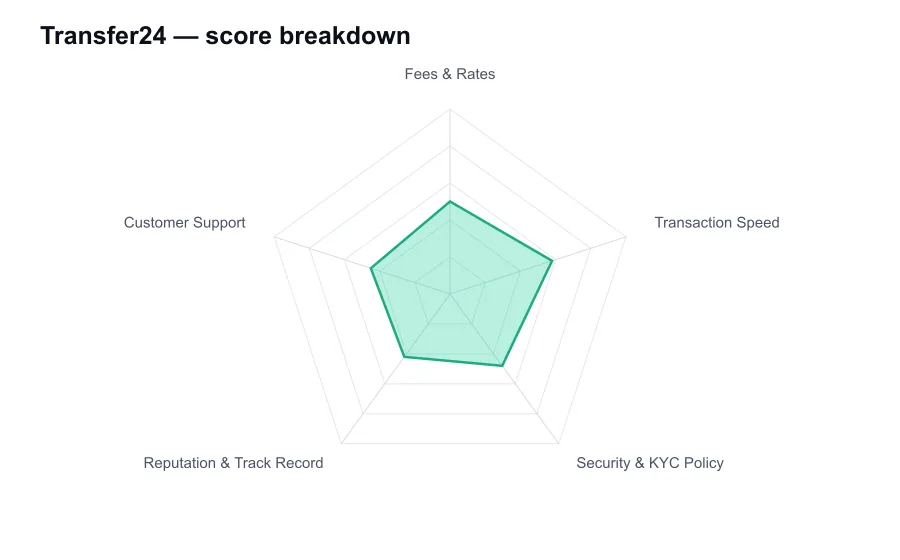
Transfer24 does not inspire the same pricing confidence as an exchange with a comprehensive public fee table and deep visible order books. That does not mean its quotes are always poor. Sometimes an aggregator or smaller exchange can produce an excellent result on a particular route. It means the customer has to do the benchmarking. Check the net output at the point of exchange, then repeat that comparison if the amount or destination asset changes.
The speed question deserves the same discipline. A provider may create an order instantly while the actual transfer still depends on the deposit transaction being confirmed. Bitcoin can be slow during fee pressure. Ethereum token transfers can wait if the sender selected an inadequate gas fee. A card or bank payment may be subject to its own checks. Transfer24 can only control what happens after it has received usable funds and has secured the outgoing liquidity.
For common crypto to crypto exchanges, a smooth transaction may feel fast because there are few human steps. That is the good case. The bad case is a transaction that is pending because of a network mismatch, a missing destination tag, a volatile quote, or a compliance alert. Small providers rarely publish the same detailed incident reporting and order status infrastructure offered by major exchanges. That leaves customers dependent on support during the exact moment clarity matters most.
I would not use Transfer24 for payroll, a property deposit, a liquidation deadline, or any transfer where a delay carries a real financial penalty. Use a provider with a contractual service relationship and a known escalation route for that kind of work. For a personal conversion that can wait, the risk is more manageable. That distinction is not alarmist, it is simply sensible risk sizing.
Security information is another area where public visibility matters. A site can be technically functional while offering little evidence about its ownership, operational controls, wallet security, or compliance processes. With small exchangers, users need to apply their own safeguards. Navigate to the site directly, do not trust paid search ads or copied links, verify the receiving address character by character, and avoid leaving funds in a temporary wallet longer than necessary.
KYC is not a binary feature. A customer might complete several orders without an identity request, then encounter screening on a later transaction. That possibility is especially relevant if the source of funds, address history, amount, or destination creates risk flags. Anyone who cannot provide documentation should avoid sending first and asking policy questions later. A held transaction is frustrating enough. A held transaction involving money you urgently need is much worse.
Transfer24's reputation is limited by its relatively small public footprint. There is simply less independently verifiable material than there is for the large exchanges that have spent years under regulatory, media, and user scrutiny. A lack of major public controversy is not the same thing as a proven operating history. I would give more weight to a provider's ability to explain itself clearly than to isolated review snippets, which can be incomplete, outdated, or difficult to authenticate.
Support is the category where an otherwise decent small service can either earn repeat business or lose it. A useful response should identify the order, explain the status in plain language, and tell the customer what evidence is needed. Vague replies about technical work do not solve anything. Before using Transfer24 with a material amount, confirm that the listed contact channel works and keep the transaction ID, wallet hash, quote, and screenshots ready.
There is a reasonable use case here. Transfer24 can appeal to a crypto native user who is making a small conversion, has time to wait through normal confirmation delays, and is willing to shop quotes. That user should still use a fresh browser session, send a test amount, and make sure the chosen chain is supported at both ends. Convenience is valuable, but it should not become blind trust.
My take is that Transfer24 belongs in the secondary tool category. It may provide a clean route for occasional exchanges, particularly if a live quote beats better known alternatives. The service does not show enough public depth to justify sending a large amount without a prior successful test. If you value transparent fees, strong regulatory disclosure, and robust support channels, a larger exchange is the better home for your activity.