BTC2Pay appears positioned closer to a crypto payment and exchange utility than to a conventional retail trading platform. That can make it appealing to users who think in terms of sending, receiving, or converting value rather than placing market orders. The catch is familiar: payment-oriented crypto services often ask customers to trust an intermediary at the precise moment a transaction matters. A polished checkout flow is useful, but the important questions are who operates it, how settlement works, and what happens when a payment does not follow the happy path.
The name suggests a bridge between Bitcoin and payments, but prospective users should resist reading more into a brand than the public evidence supports. It should not be assumed to offer the safeguards of a licensed payment institution, merchant acquirer, or major regulated exchange unless those claims can be verified in current legal disclosures. Crypto firms frequently use payment language while operating under a very different risk model. BTC2Pay should be treated as a crypto service provider first, not as a substitute for a bank transfer or card processor.
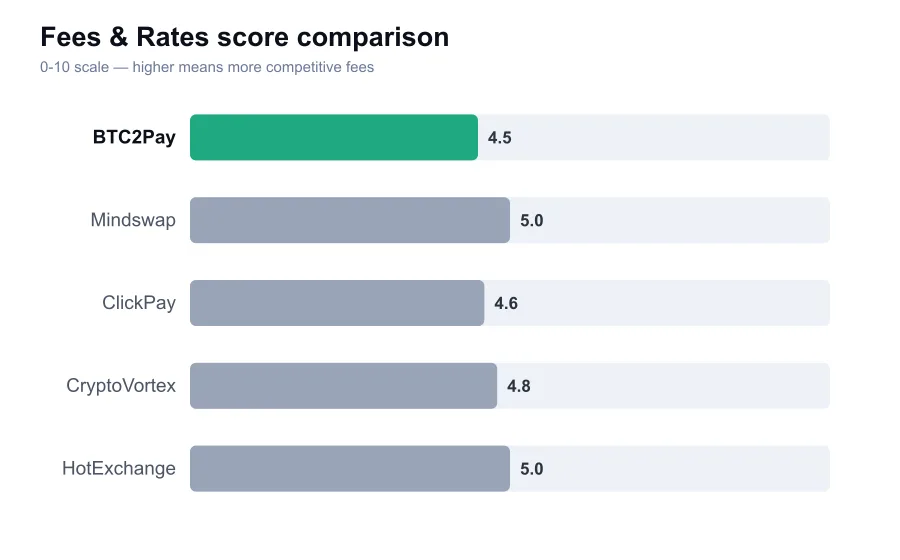
Price is particularly important for payment-facing services because customers may accept a bad rate in exchange for perceived speed. That trade can be expensive. A conversion quote can include a service charge, market spread, network fee, and sometimes a liquidity premium for smaller assets. I could not verify a comprehensive public pricing table that makes every possible charge easy to calculate before initiating an order. That means the final output amount and the exact rate lock conditions are the only figures I would rely on.
For a merchant, even a one percent pricing difference can erase the convenience benefit of crypto settlement. For an individual, the concern is simpler: compare the amount you will receive against a known alternative, then decide whether the speed or convenience is worth the difference. Do this before opening the payment window, not after funds are sent. BTC2Pay may produce acceptable quotes on some routes, but it has not earned a reputation for fee transparency strong enough to skip that comparison.
Settlement speed depends on what BTC2Pay is actually processing. A direct wallet transfer on a fast network can move rapidly, though the service still needs to detect and validate it. Bitcoin payments may need confirmations, which are variable. Token transfers can fail or delay because of network congestion, insufficient gas, or a mismatched chain. Card-like language should not cause users to expect card-like chargebacks or guaranteed delivery times. Crypto payments are usually final once confirmed, and operational errors are harder to unwind.
That finality can be a strength for merchants who understand it, but only if payout status is transparent. A professional payment tool should show the invoice or order state, amount received, required confirmations, expiry time, and destination transaction hash. It should clearly distinguish an underpayment from a pending payment and a completed payment from a payout merely initiated. Without those details, users cannot independently tell whether a delay is on the blockchain or inside the company. I have not seen enough verifiable reporting to give BTC2Pay a strong score for proven execution speed.
Security begins at the payment request. If you are accepting a BTC2Pay invoice or using a link provided by someone else, verify the merchant and the destination details through an independent channel. Scam invoices can look convincing, and blockchain payments generally cannot be recalled after confirmation. If you are the sender, never send an additional amount to a different address because a chat account says a payment needs activation. A legitimate payment processor should be able to explain an issue through its published support route and existing order record.
For users holding funds on any BTC2Pay-controlled balance or passing money through a hosted workflow, counterparty risk is the central issue. The service may be convenient, but convenience does not equal deposit protection. Keep operating balances small. Reconcile completed payments quickly. Move funds to self-custody or a trusted business account rather than leaving them sitting in a service wallet. This advice applies broadly across crypto payments, but it matters most where public information about reserves, security audits, and corporate governance is limited.
The KYC question should be approached without assumptions. Payment and exchange services can request verification based on payment size, transaction monitoring, jurisdiction, source-of-funds concerns, or a merchant's compliance requirements. A quick sign-up experience is not a promise of permanent anonymity. If you are a business that needs predictable onboarding, request written confirmation of the documentation process before routing customer payments through BTC2Pay. Finding out that an account review is required while an invoice is pending is bad operations.
BTC2Pay's public reputation does not appear deep enough to match major payment brands or long-running exchanges. This is not a verdict that it cannot work. It is a practical warning that there is less independent material for a customer to use in assessing resilience, service quality, and complaint handling. A trustworthy provider should be able to point to clear legal terms, support channels, service-level expectations, and a history that is not limited to promotional posts. The smaller the public footprint, the smaller the initial exposure should be.
Support is arguably more important here than at a simple swap site. Payment problems affect two parties, the person paying and the person expecting payment. A delayed order can become a customer-service issue for a merchant even if the underlying blockchain is functioning normally. BTC2Pay needs to be judged on whether its team can identify an invoice, explain confirmation status, and provide a clear next step without making customers chase vague replies. Test that capability with a low-value transaction before connecting it to any commercial workflow.
I would not deploy BTC2Pay as the sole payment rail for a store, contractor business, or high-value seller without a history of successful tests and a contingency method. Keep a second option available, whether that is direct wallet payment, a larger crypto processor, or a conventional bank method. Export transaction data as you go, maintain copies of invoices, and ensure the receiving wallet is controlled by the business rather than a single employee. Those procedures matter more than a dashboard's design.
For a personal user, BTC2Pay could be relevant if the specific counterparty requires it and the amount is small enough to manage conservatively. That is a narrower use case than the marketing implied by a payments brand. There is little reason to route a routine crypto purchase through a lesser-known intermediary when direct on-chain payment or a more established service is available. The added layer must solve a real problem, not merely make the screen look easier.
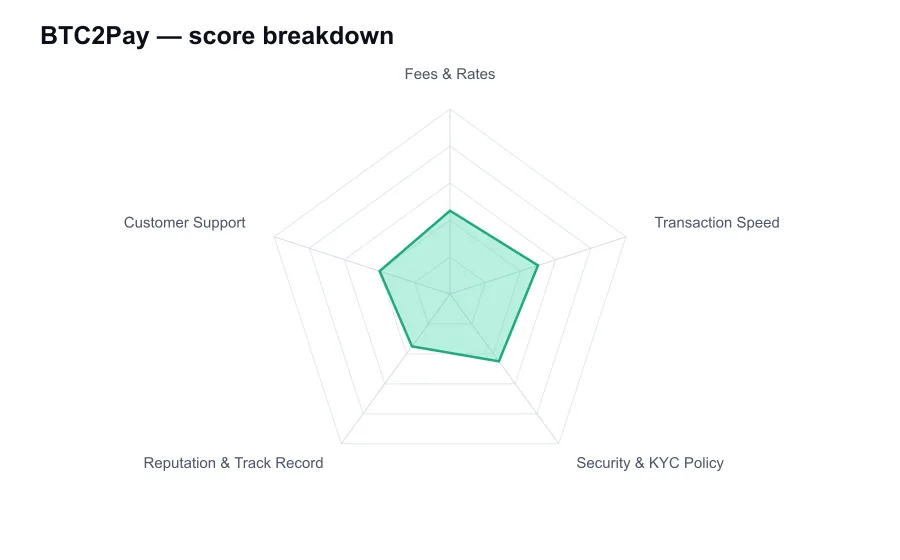
My judgment is that BTC2Pay may have a place as a cautiously tested utility, but not yet as a trusted payments foundation. The uncertainty around transparent pricing, documented KYC escalation, public operating history, and support performance outweighs the convenience of a simple crypto-payment interface. Small tests and careful records are appropriate. Larger balances, merchant revenue, and deadline-sensitive transfers should go to providers with clearer accountability and a stronger track record.