MindSwap was a Fantom-focused DeFi project that emerged during the 2021 rush of automated market makers, yield farms, and token incentive programs. It offered token swapping, liquidity provision, farming, and related ecosystem features built around the Fantom network. At its peak, it belonged to the crowded second tier of chain-native DeFi brands trying to capture liquidity before it moved to the next incentive program. That context matters more than its old promotional language.
Today, MindSwap should be approached as a legacy or high-maintenance DeFi product rather than a mainstream active exchange. Crypto websites and smart contracts can remain visible long after development, liquidity, community moderation, and customer assistance have faded. A working interface is not proof of an actively maintained protocol. Before using it, check recent official announcements, contract activity, total liquidity, social activity, and whether the domain itself is still under the control of the original project.
The original trading model was the familiar automated market maker. Users traded against liquidity pools rather than a centralized order book, and liquidity providers earned a share of swap fees plus token incentives where those were offered. That structure is easy to understand if you have used Uniswap or SpookySwap. It is much less forgiving than an order-book exchange because the price depends directly on the size and balance of a pool.
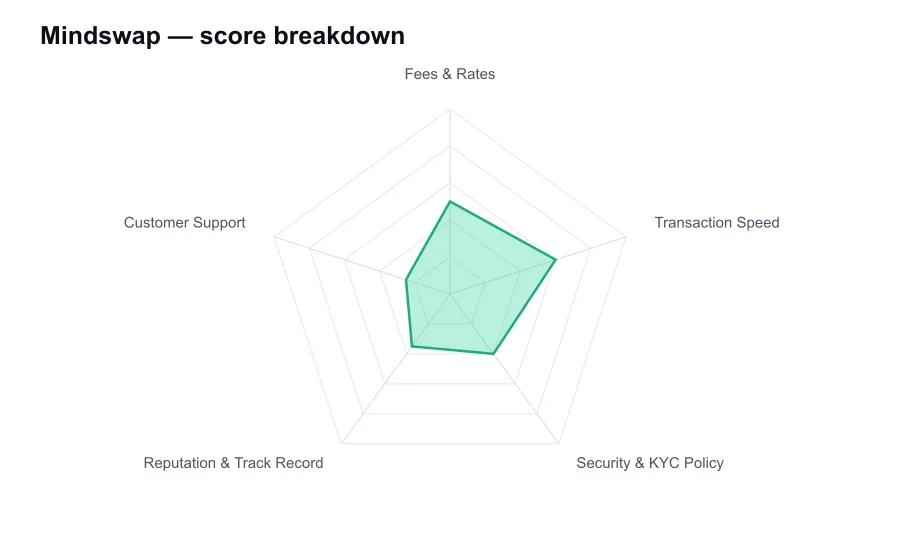
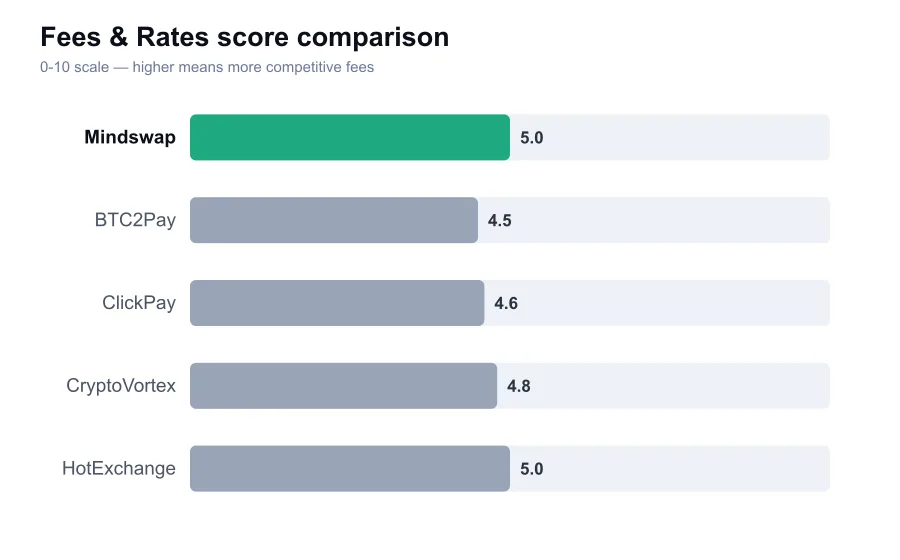
A standard AMM fee may sound inexpensive in isolation, but a low stated fee does not guarantee a cheap trade. The actual cost includes pool fee, Fantom network gas, price impact, and slippage. During the chain's busy periods, Fantom was usually much cheaper than Ethereum mainnet, which made small swaps feasible. The more serious concern now is pool depth. A thin pool can impose more damage through price impact than a large exchange would charge in fees.
MindSwap's former low-fee appeal was therefore real only for liquid pairs and active conditions. A user swapping a popular asset in a healthy Fantom pool could get a quick, inexpensive execution. A user swapping an obscure token, especially now that liquidity may be fragmented or abandoned, can get an awful fill. The interface cannot rescue a market with little liquidity. Always look at the price impact and minimum received figure before confirming.
Speed follows the same pattern. Fantom transactions can confirm quickly and cost little compared with Ethereum, so a straightforward swap historically felt almost immediate. But blockchain confirmation is only one part of the experience. A transaction may fail because slippage is too tight, because the token has transfer behavior the AMM does not expect, or because the pool changed before execution. Fast blocks do not make an unsupported or illiquid token easy to trade.
MindSwap did not operate like a custodial exchange. Users connected a browser wallet, approved token spending, and signed their own transactions. There was no normal account opening process and no platform-level KYC for a basic on-chain swap. That is attractive to privacy-minded DeFi users, but it shifts responsibility onto the user. A lost seed phrase, malicious approval, wrong token contract, or phishing site cannot be fixed by opening a support ticket.
Its contracts and DeFi-era design should be evaluated with particular skepticism now. Even if a contract was audited or reviewed during the project's active period, audit results age poorly when the surrounding product loses maintainers, liquidity providers, and active monitoring. Smart-contract code may remain immutable, but the operational environment does not. Oracle dependencies, front-end domains, token lists, admin permissions, and integrations all deserve checking.
The MIND token and the project's incentive economy are another reason to separate history from current usefulness. High farm yields in the 2021 market often reflected token emissions rather than sustainable trading demand. Once emissions slowed or attention moved elsewhere, many farms lost liquidity and their governance tokens suffered. That does not make MindSwap uniquely bad. It does make old annual percentage yield screenshots almost useless as evidence for a current investment decision.
Reputation is modest and highly era-specific. MindSwap was known to Fantom DeFi users during the network's expansion, but it never established the broader institutional credibility of Uniswap or the enduring chain prominence of larger Fantom names such as SpookySwap. A project can have a genuine community and still lack the resilience needed for a long crypto winter. The limited current visibility is a meaningful negative for anyone considering fresh capital.
Support is likely the weakest practical area. Legacy DeFi projects often leave documentation, old social accounts, and a functioning contract behind, while the people who once answered questions have moved on. That can make a routine mistake feel permanent. If the official channels are quiet or the website does not clearly identify active administrators, assume there is no dependable recovery process. Never trust unsolicited direct messages claiming to be MindSwap support.
For someone researching old Fantom positions, MindSwap may still be relevant. You may need to inspect a token approval, remove liquidity, identify a historical transaction, or determine whether an asset is still recoverable through the contract. Those are technical maintenance tasks, not reasons to start farming. Use a separate wallet if possible, verify contracts with reliable explorers, and do not sign a migration or claim transaction until you understand exactly what it does.
New users have much better choices for current on-chain trading. On Fantom, compare active venues and current liquidity. Across DeFi more broadly, use established aggregators and DEXs with current development, visible liquidity, active security communication, and functioning communities. If you simply want to buy BTC, ETH, or stablecoins, a reputable centralized exchange is safer and easier than navigating an aging AMM interface.
My judgment is that MindSwap belongs in the category of historical DeFi infrastructure that may still require careful interaction, not a platform I would recommend for new money. Its old strengths were cheap Fantom transactions, no-KYC wallet access, and familiar AMM mechanics. Its current weaknesses are far more important: uncertain activity, potentially shallow liquidity, limited support, and the risks that come with neglected DeFi surfaces. Curiosity is fine. Depositing meaningful capital is not.