Coinmotion is a Finnish crypto service that has built its reputation around custody, compliance and a distinctly Northern European preference for restraint. It began life in 2012 as Prasos and later adopted the Coinmotion name. The company is not trying to win a race for the longest token list. Its pitch is simpler, buy and hold a small range of established cryptoassets through a regulated European-facing service with human support.
That positioning makes Coinmotion feel closer to a digital-asset wealth platform than a conventional high-volume exchange. Bitcoin is naturally central, but users can also access major assets such as Ether and selected alternatives depending on their country. The product range includes recurring purchases, a wallet, transfers, a payment card in supported regions and services aimed at wealthier clients. It is a more mature package than a basic buy button.
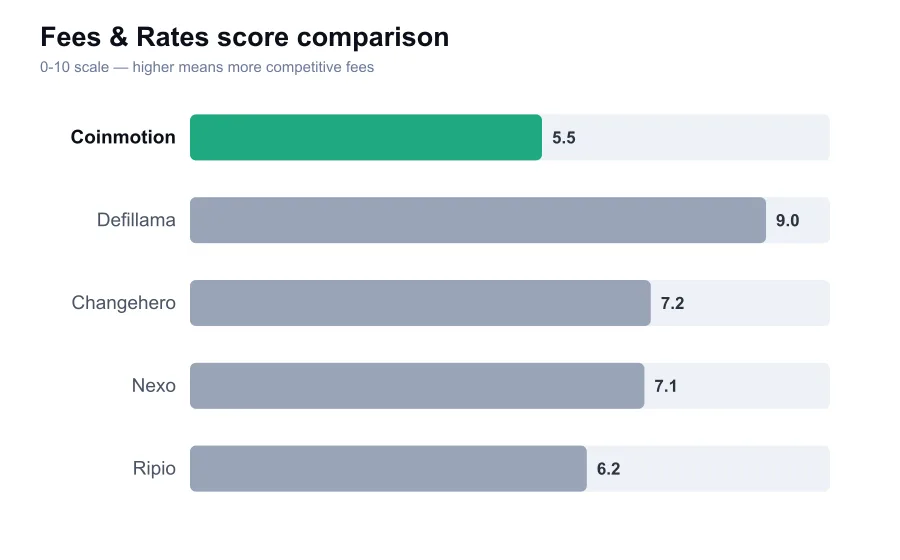
The main criticism is price. Coinmotion's standard trading fee has commonly been around 2 percent, with lower rates available through its tiered loyalty levels and larger-volume arrangements. Two percent is expensive in a market where Kraken Pro's entry trading fees are far lower and large exchanges can charge a fraction of one percent. Someone making frequent trades will feel that difference very quickly.
Coinmotion argues, reasonably, that its service includes custody infrastructure, compliance and support rather than a bare-bones order book. That explanation may satisfy a first-time buyer who wants a Finnish or European operator they can call. It does not make the fee cheap. Investors should also distinguish between the service fee, the market spread and blockchain withdrawal charges. A simple screen showing a purchase price does not guarantee it is the best executable price.
For recurring investing, the economics are more defensible if the user values convenience and makes modest, regular purchases. A monthly Bitcoin plan is less sensitive to a percentage fee than a day trader moving in and out of positions. Still, buying on a lower-fee exchange and withdrawing periodically can be cheaper for disciplined users. Coinmotion sells peace of mind, not bargain-bin execution.
Fiat transfers through European banking rails are one of its practical strengths. SEPA payments are familiar to its core customers and normally move efficiently, often within a business day once the bank processes them. Card purchases and other payment methods can offer more immediacy but may carry different costs. Crypto withdrawals depend on the network and Coinmotion's internal security approval process, so they should not be treated as instant.
The platform is designed to be understandable. That sounds minor until you have watched a newcomer accidentally trade perpetual futures or send funds over the wrong network. Coinmotion keeps the experience focused on buying, holding and transferring. Experienced users may find it almost too controlled, because sophisticated charting, deep order-book tools and derivatives are not the central attraction.
Security is handled seriously. Coinmotion describes the use of cold storage for client assets, multi-signature security arrangements and account protections such as two-factor authentication. It also operates with a regulatory mindset shaped by Finland and European anti-money-laundering rules. Customers should enable strong two-factor authentication, use a unique password and turn on any available withdrawal safeguards. Good custody processes cannot protect a careless account login.
KYC is not optional for meaningful use. Expect identity verification and questions about the source of funds, particularly for larger transactions. Some people still resent this as unnecessary intrusion, but Coinmotion is plainly intended for customers who want regulated access to the banking system. It is unsuitable for anyone whose primary requirement is anonymous cryptocurrency use.
Coinmotion's history gives it an advantage over many recent fintech entrants. Surviving since 2012 through Bitcoin crashes, the 2017 retail mania and the industry failures of 2022 says something about operational caution. It is not immune to the risks facing every custodian, and its smaller scale means users should not assume it has the resources of a global giant. But it has a much more credible track record than a newly launched broker with a celebrity campaign.
The company has also tried to serve clients who need more than a personal wallet. Corporate accounts, wealth-management style services and inheritance-oriented planning make sense for a platform based in a region where crypto is increasingly treated as part of a broader financial estate. This is a useful distinction. Coinmotion is more compelling for a client with a long-term allocation than for someone chasing the newest token listing.
Support is one of the service's better arguments. A smaller, regional provider can be easier to deal with than an offshore exchange whose responses are fully automated and generic. Coinmotion provides help resources and customer channels, and users dealing with verification or bank transfers are more likely to find staff familiar with European processes. Response times can still vary, particularly during volatile markets or compliance reviews.
The Coinmotion card adds convenience for users who want to spend crypto balances, but it should not be mistaken for a reason to keep an entire investment portfolio on a platform. Spending crypto can create tax consequences in many countries, and card conversion rates deserve scrutiny. It is a useful accessory, not the core reason to choose the company.
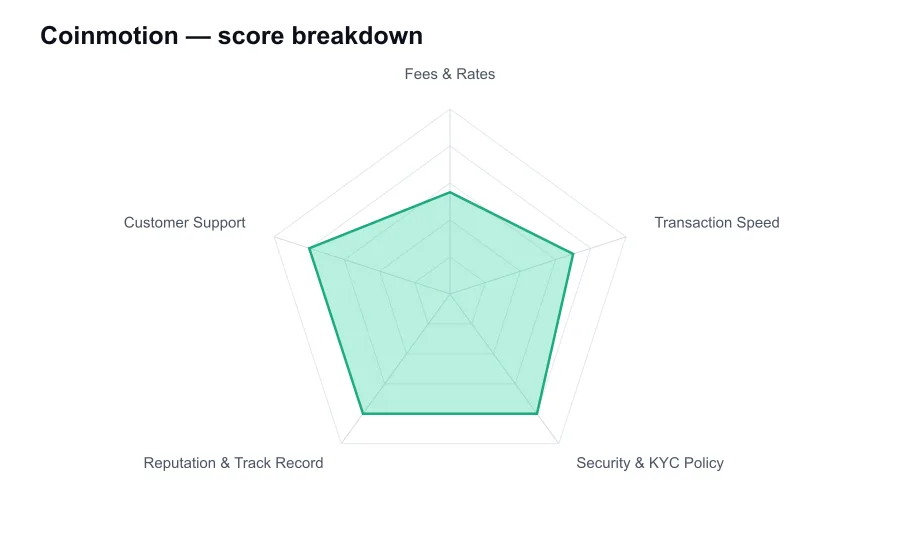
Coinmotion is best judged as a premium, compliance-led gateway rather than a cheap exchange. Its fees are its biggest weakness, and the narrow trading toolkit rules it out for active market participants. Yet the things it does well are exactly what many cautious European buyers care about: a long operating history, sensible security controls, SEPA access and a service that does not treat customers as anonymous order flow. If that reassurance is worth paying for, Coinmotion is a credible choice. If not, there are cheaper venues.