DefiLlama is not a conventional crypto exchange, and treating it like one would mislead readers. It is primarily a free data and analytics platform for decentralized finance, known for tracking total value locked, protocol activity, yields, bridges, stablecoins and chain-level metrics. It also offers tools such as LlamaSwap, which can route token swaps through decentralized liquidity sources. That makes it useful beside an exchange, not a direct replacement for one.
The site has become one of the default research destinations for DeFi users because it is fast, broad and far less promotional than many crypto data portals. A visitor can inspect lending markets, decentralized exchanges, bridges and stablecoin supply without creating an account. That no-login model is a real advantage for research. There is no custody account to open and no sales funnel trying to force a deposit.
Its core analytics service is free. That is an excellent deal, especially compared with data products that lock basic chain metrics behind a paid terminal. DefiLlama earns goodwill by making useful dashboards available without a subscription. Free does not mean consequence-free, though. The real cost appears if a user acts on misleading data, misunderstands a protocol's risks or executes a swap through a poor route.
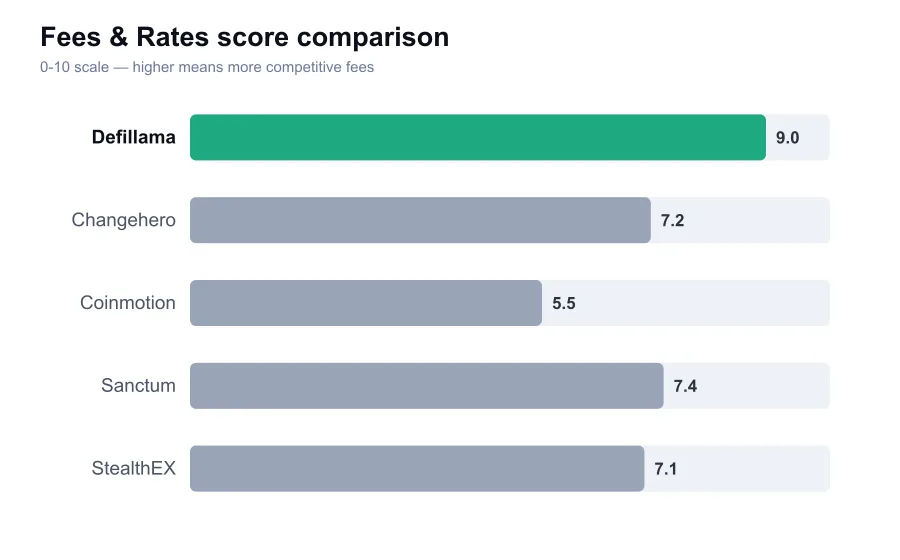
LlamaSwap is the part that most closely resembles an exchange function. It acts as an interface and routing layer for decentralized swaps, seeking quotes across aggregators and liquidity venues. The precise cost of a swap is never just one platform fee. It includes liquidity-provider fees, price impact, gas fees, the fee charged by any underlying aggregator or protocol, and the possibility of a token approval transaction.
That structure can produce excellent prices for common assets on a well-supported chain, particularly when competition between routes is strong. It can also be brutal on a thinly traded token or during network congestion. A user who sees a seemingly cheap quote should inspect the minimum received amount, route, token contract and gas estimate. Decentralized execution is fast in the sense that it settles once the blockchain confirms it, but that is not the same thing as guaranteed execution at a fixed price.
Speed depends entirely on the selected network. A swap on a low-cost layer-two network may confirm in seconds or minutes. Mainnet Ethereum can be slower and much more expensive when gas is high. Cross-chain actions introduce another level of delay and risk because bridges have their own validators, message systems and finality assumptions. DefiLlama cannot make a congested chain fast simply by presenting a better interface.
The security model is radically different from Independent Reserve or Coinmotion. DefiLlama does not normally hold a user's crypto or operate a custodial balance. The wallet owner signs transactions, retains the private keys and bears the immediate responsibility for each approval and transfer. That removes exchange insolvency risk from the basic research experience, but it shifts much more responsibility to the user.
No KYC is required to browse the data, and connecting a self-custody wallet to a DeFi interface generally does not require identity documents. Privacy-minded users will welcome that. It also means there is no recovery desk if a wallet is compromised or a transaction is signed by mistake. On-chain transfers are generally irreversible. The lack of KYC should never be mistaken for a lack of risk.
DefiLlama's data work is respected, but data aggregation is not divine truth. Protocol TVL can be distorted by double-counting, token price swings, incentive farming or unusual vault structures. Yield figures can be annualized snapshots that disappear as soon as incentives end. The site is valuable because it makes comparison easier, not because it eliminates the need to read protocol documentation, audit reports and smart-contract risks.
The brand also had a public internal dispute in 2023, when a proposed token launch and control of the project created a split among contributors. The episode was messy, but the core platform continued operating and the situation ultimately reinforced a useful lesson about crypto infrastructure: even respected open-data brands depend on human governance. It did not destroy DefiLlama's standing, but it is part of the track record.
Support is the weak point if a user approaches DefiLlama expecting exchange-style account service. There is documentation, social channels and community visibility, but no conventional customer-service operation that can reverse a transfer, investigate an account lock or refund a bad swap. That is not necessarily a failure, because the analytics product does not require a customer account. It does mean beginners need to be honest about their own level of technical confidence.
The site is particularly useful for comparing stablecoin exposure, bridge flows and protocol concentration before moving funds. Those dashboards can expose things that are easy to miss in a wallet app, such as a yield protocol depending heavily on one incentive token or a chain's liquidity being concentrated in a single bridge. This is where DefiLlama is genuinely excellent. It gives a skeptical user more raw material for saying no.
It is less useful as a place to learn basic custody habits from scratch. A newcomer can open a page, connect a wallet and encounter token approvals, wrapped assets, unfamiliar networks and contracts that look almost identical to legitimate ones. DefiLlama cannot protect someone who clicks a malicious link from a search result or signs an unlimited approval without understanding it. Bookmark the official domain and verify contract addresses independently.
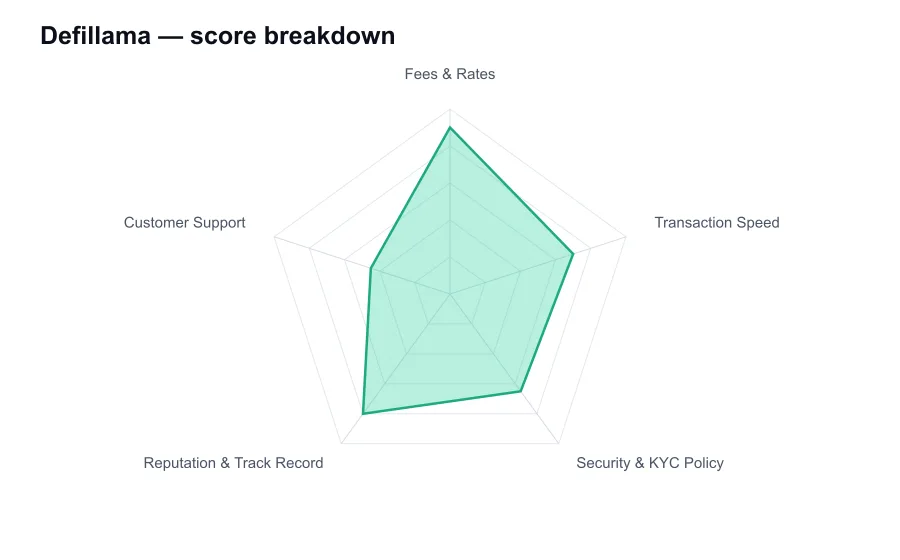
I rate DefiLlama highly as research infrastructure and only moderately as a swap gateway for inexperienced users. Its free access, breadth and non-custodial nature are meaningful strengths. But anyone who needs fiat deposits, regulated custody, telephone support or transaction reversals should use a conventional exchange or broker instead. The best use of DefiLlama is to become a better-informed DeFi participant, not to outsource judgment to a dashboard.