Coinomi is primarily a multichain self-custody wallet, not an exchange in the same sense as Binance, Kraken, or a regulated brokerage. It has been around since 2014 and built its name by supporting an unusually broad collection of coins, tokens, and networks in one mobile and desktop application. Its exchange, purchase, and swap buttons are conveniences layered onto that wallet experience, usually through outside service providers.
That distinction matters because a user can easily misunderstand what they are paying for. Coinomi does not operate a deep central order book where buyers and sellers meet. A swap quote normally comes from an integrated third party, and the final cost can include the provider's spread, network fee, and any service charge displayed before confirmation. Comparing only the visible coin amount without checking a market price is the fastest way to overpay.
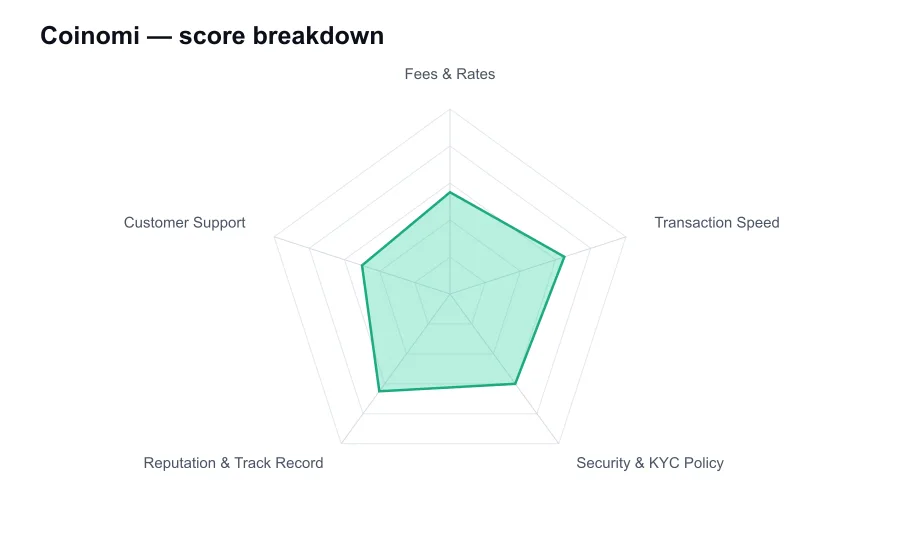
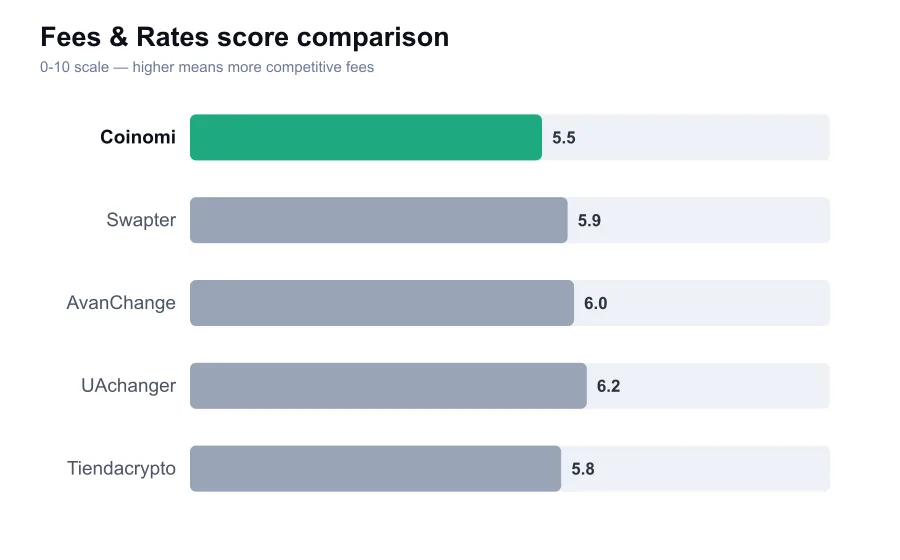
For simple wallet use, Coinomi itself does not charge a custody fee because it does not custody the assets. Sending crypto costs the relevant blockchain network fee, and that fee varies widely. Bitcoin fees can rise during mempool congestion, Ethereum fees can spike sharply, and a cheap chain may cost pennies. Coinomi's role is largely to help construct and broadcast the transaction, not to make the blockchain cheap.
The in-app swap proposition is about convenience rather than best execution. It can save time for someone swapping a less common asset without moving funds through several wallets and exchanges. That is useful. But a disciplined trader should compare the quoted output with a major exchange, a decentralized exchange, or another aggregator before accepting it. Integrated swaps commonly carry wider spreads than a liquid spot market, particularly for small-cap coins or urgent transactions.
Purchasing crypto with a card or bank method inside a wallet is usually even more expensive. The payment processor and fiat ramp set their own pricing, availability, limits, and identity requirements. A user may see Coinomi's familiar interface but still be dealing with a separate company for settlement and compliance. Anyone expecting a uniform Coinomi fee schedule will be disappointed, because the costs depend heavily on country, asset, payment rail, and selected partner.
Speed follows the same pattern. A normal onchain send is subject to network conditions and the fee selected. Bitcoin can take minutes to receive a first confirmation and longer to become comfortably final. Faster networks may show a transfer almost immediately. Swaps depend on both chains and on the partner handling the conversion, so they can finish quickly or take longer during liquidity or confirmation delays. Coinomi cannot make a slow blockchain settle instantly.
Security is where Coinomi's self-custody model earns real credit. Private keys and recovery phrases are controlled by the user rather than held in a centralized exchange account. That removes the familiar risk of an exchange freeze, insolvency, or account takeover caused by a weak exchange password. It also means a lost recovery phrase is not something Coinomi can retrieve. Self-custody gives control and responsibility in the same package.
The wallet supports local encryption, password protection, and recovery through the seed phrase. Users should treat that phrase as the master key to the entire wallet, store it offline, and never enter it into a website or send it to a supposed support agent. A hardware wallet remains a stronger choice for significant long-term holdings, especially for users who do not want their key material exposed on a phone or everyday computer. Coinomi is practical, but it is still software-wallet security.
Coinomi's security reputation is not spotless. In 2019, researcher Saleem Rashid disclosed an issue involving the wallet's spell-check behavior that could potentially expose a recovery phrase under certain conditions. Coinomi disputed aspects of the disclosure and said it addressed the issue. The episode does not prove current users are unsafe, but it is a useful reminder that closed-source or partially inspectable wallet software requires trust. No wallet should be treated as beyond scrutiny.
KYC is another area where labels can confuse people. Creating and using the Coinomi wallet does not ordinarily require identity verification. That does not mean every service inside it is anonymous. Fiat purchase partners, exchange providers, and country-specific services can request identification or block certain regions. The wallet may be no-KYC, while the transaction a user wants to make is not. Read the partner's terms before sending funds.
Coinomi's long track record counts for something. Supporting a huge number of assets over many years is difficult, and the wallet has outlasted plenty of thinner, trend-driven competitors. It has a recognizable brand among altcoin holders who value breadth. Yet longevity should not be mistaken for the same regulatory assurance offered by a large licensed exchange. Coinomi is software, and the services around it vary in quality and jurisdiction.
Support is adequate for routine problems and weak for high-stakes panic. Coinomi offers a help center, guides, and support channels, but it cannot reverse confirmed blockchain transfers or restore a seed phrase. Users sometimes blame the wallet for a pending transaction that is actually delayed by the underlying network or for a swap issue controlled by a third-party provider. The support process can feel frustrating because the answer is often technically correct but not emotionally satisfying.
I would use Coinomi as a convenience wallet for a diverse collection of smaller assets, not as my sole vault or primary trading venue. Its broad chain support is genuinely useful, particularly for users who would otherwise juggle several apps. For frequent traders, a liquid exchange and a dedicated hardware wallet are usually a sharper combination. Coinomi is strongest in the middle ground, where convenience matters but the user still understands self-custody.
The final judgment is positive but qualified. Coinomi gives users control, supports an impressive range of assets, and avoids the account friction of a centralized exchange. Its built-in trading services are not automatically cheap, and its security history means blind trust would be foolish. Use it for what it is, a capable multichain wallet with partner integrations. Do not use it as though it were a regulated exchange, a bank, or an irreversible-transfer insurance policy.