Tiendacrypto is a Latin American crypto service that has focused on making Bitcoin and other digital assets accessible through familiar local payment methods. It is not trying to be a global derivatives exchange with hundreds of speculative tokens. Its appeal is more practical, especially for users in markets where buying crypto with local currency can otherwise involve confusing offshore platforms, informal peer-to-peer deals, or expensive international transfers.
That narrower role shapes the whole experience. Tiendacrypto is closer to a retail broker and payment gateway than to an order-book exchange. A customer selects an amount, chooses a payment route, completes verification where required, and receives crypto at the quoted rate. That is a perfectly valid model for newcomers, but it means users should judge it by the quality of its quote, settlement reliability, and local support rather than expecting professional trading tools.
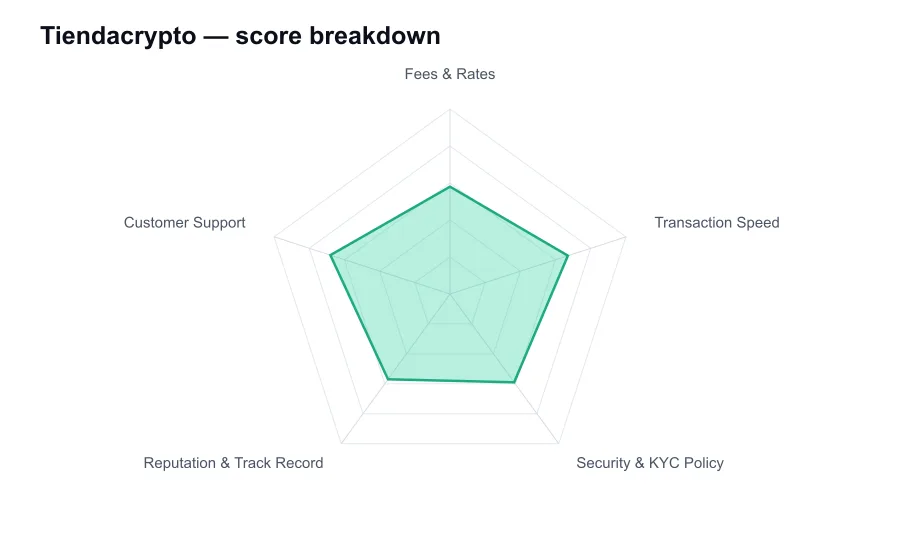
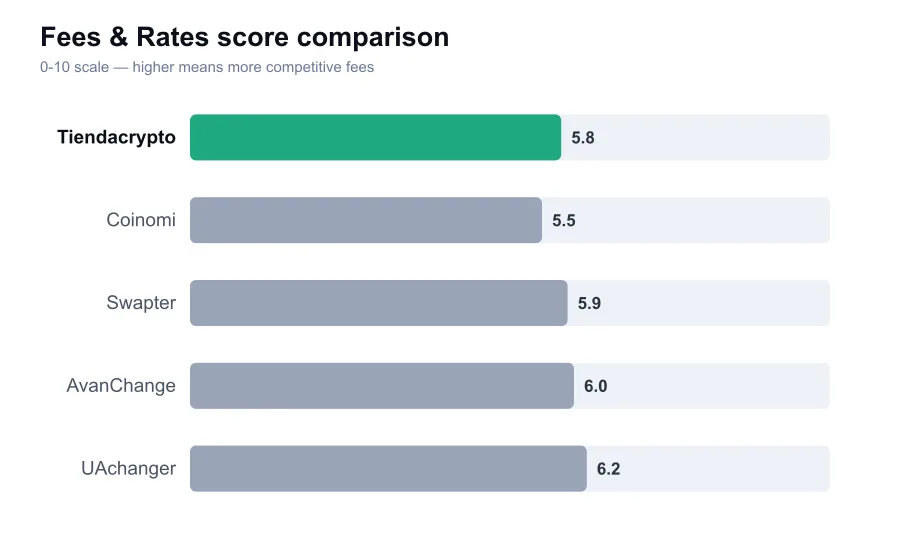
Its fees are not always presented as a simple maker-taker table because the effective cost is normally built into the purchase or sale quote. That makes Tiendacrypto easy to use and harder to benchmark. The customer sees what will be paid and what will be received, which is helpful. The missing piece is a public, universally comparable percentage fee that lets a buyer immediately measure the premium against the live market.
For small local-currency purchases, convenience can justify a modest premium. A user who wants to buy a limited amount of Bitcoin with a domestic transfer may value an easy checkout more than saving a fraction of a percent on an offshore exchange. For larger purchases, that logic changes. Ask for the quote, compare it with the spot price on a liquid venue, and calculate the difference before sending money. Broker spreads compound fast on repeat buying.
Payment method matters as much as the asset. Bank transfers tend to be cheaper than cards or cash-style payment networks, while card payments can carry higher processing costs or lower limits. Tiendacrypto users should also confirm whether their local bank treats a crypto-related transfer unusually. The provider cannot control every banking delay or rejection. It can, however, make payment instructions clear, and that is an area where a local operator has an advantage over a distant global exchange.
Speed is usually good after the payment has cleared. Crypto can be sent quickly, but a purchase is only as fast as the chosen fiat rail and the platform's review process. Instant local transfers may lead to rapid delivery during staffed hours, whereas conventional bank deposits can wait for reconciliation. A Bitcoin withdrawal then has the usual blockchain timing. Users expecting immediate coins should choose a payment method that actually settles immediately.
The service is better suited to buying and selling than to constant asset rotation. There is no reason to treat a broker-style checkout as a trading terminal. Every conversion can include a spread, and liquidity may be less robust than it is at a major exchange. If you are dollar-cost averaging into Bitcoin or sending a one-off remittance, the model is sensible. If you are scalping price moves, it is the wrong tool.
Security requires a slightly different lens with smaller regional providers. Tiendacrypto has the normal need for secure account access, identity checks, transaction monitoring, and safe handling of customer funds. Users should enable every available account-protection option, use a unique password, and confirm withdrawal addresses carefully. More importantly, do not assume a simple retail interface means the same institutional custody architecture offered by the largest global platforms.
KYC expectations depend on the country, transaction size, and payment route, but users should expect identity verification rather than anonymous buying. That is normal for a compliant fiat-facing service. It may ask for personal identification and, in higher-risk or larger transactions, additional documentation. People seeking no-KYC crypto should not try to force a regulated local purchase provider into that role. It can result in rejected payments or account reviews.
A smaller footprint also means less independently verifiable information about reserves, security audits, and operational controls than you would find at publicly scrutinized multinational exchanges. That does not establish that Tiendacrypto is unsafe. It does mean the burden shifts to the customer to keep balances modest and to withdraw long-term holdings to a wallet they control. This is sensible practice with any broker, but it matters more where public disclosure is limited.
Tiendacrypto's reputation is strongest in the regional context it serves. Local language, domestic payment knowledge, and a straightforward purchase flow solve real problems that a giant exchange often ignores. It does not have Nexo's lending history, Kraken's long international record, or Bitso's scale across Latin America. That should temper expectations. A smaller provider can be useful without being the place to park a life-changing balance.
Customer service is one area where local specialization can genuinely matter. Support in the customer's language, with knowledge of local banks and payment rails, is more valuable than generic multilingual scripts. The limitation is capacity. Small teams can be responsive on routine transactions yet struggle when a bank dispute, compliance check, or blockchain error becomes complicated. Keep complete receipts, transaction IDs, and payment confirmations, because those details make support much more effective.
I would also be careful with third-party listings, social-media accounts, and copycat domains. Regional brands are often targeted by impersonators because users may be less familiar with the official web address. Start from the official site, do not send crypto to an address supplied in a direct message, and verify payment instructions inside a logged-in session. The most common loss in this part of the market is often social engineering, not a failure of blockchain technology.
Tiendacrypto is useful precisely because it does not pretend to be everything. It can make a local purchase far less intimidating than using an offshore trading venue, and that has real value. The trade-off is less fee transparency, less public institutional detail, and fewer advanced tools. I would use it for a carefully checked local on-ramp and move longer-term coins to self-custody. For high-frequency trading, large custody balances, or deep liquidity, choose a larger exchange.