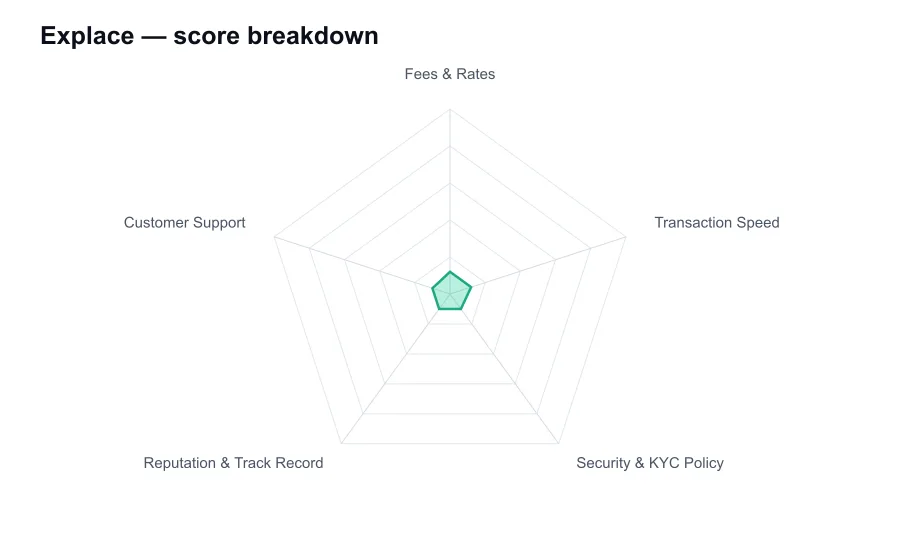
Explace is not a provider I can place alongside recognized crypto exchanges with confidence. The name does not lead to a clearly established, independently verifiable exchange operator, and I could not confirm an official website that should safely receive customer funds. That means the central question is not whether Explace has the best trading fee or fastest order matching. The central question is whether a user can verify who is taking custody of the assets in the first place. On the available evidence, that answer is not strong enough.
Crypto users should be especially alert to names like this because exchange branding is easy to imitate. A site can copy the visual language of a major platform, display familiar coin tickers, create artificial order books, and publish invented testimonials. It can even provide a temporary dashboard that shows gains. None of that proves a balance is real or withdrawable. The only useful verification is an independently confirmed operator and a successful withdrawal to a wallet controlled by the customer.
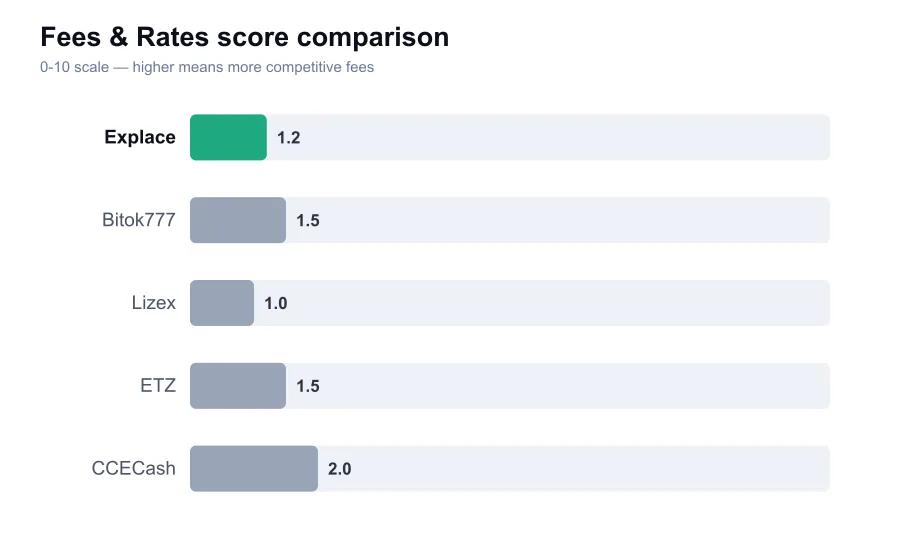
Explace does not have a fee structure I can responsibly quote. I could not confirm public maker and taker rates, spread policy, card purchase charges, stablecoin conversion costs, blockchain withdrawal fees, or restrictions linked to account tiers. A provider without a verifiable pricing page should not receive a positive fees score simply because it appears to advertise low costs. The hidden cost of an unclear platform is not a few extra basis points. It may be the inability to withdraw at all.
Be wary of a common trap: a platform may show that a trade was highly profitable, then claim that withdrawal requires a separate commission, tax payment, deposit verification, or liquidity contribution. That is not how credible exchanges handle normal customer withdrawals. Taxes are a user's legal responsibility, not a prepayment made to an anonymous support agent. Blockchain network fees also do not require sending an unrelated payment to unlock an account. Those requests are serious danger signals.
There is no credible speed record to reward either. Exchange speed should be measured by observable facts: how long deposits take to credit, whether orders execute at the shown price, whether withdrawals are approved and broadcast, and whether users can track the transaction on-chain. Claims of instant processing have no value if they concern only internal balance changes. I could not locate reliable evidence that Explace has a consistent, independently documented withdrawal process.
If an Explace representative tells you that a withdrawal is delayed because the account needs a larger balance, a VIP upgrade, or a new security deposit, do not assume that is a normal compliance procedure. Real platforms may perform identity checks and sometimes place temporary restrictions, but they do not solve those issues by asking customers to send more crypto to release existing crypto. Ask for written policy references and verify them independently. Do not let urgency override basic caution.
The security picture is similarly unresolved. I could not verify meaningful information about Explace's custody architecture, wallet segregation, cold-storage use, security audits, penetration testing, insurance, account recovery, or multi-factor authentication. No platform is risk-free, including large ones, but users should at least be able to inspect a serious security policy and decide whether the controls match the risk. With Explace, the information gap is too large.
KYC uncertainty makes the situation worse. Some questionable sites advertise frictionless registration, then request highly sensitive documents only after users try to withdraw. Others claim a verification payment is needed, which is not a legitimate substitute for proper compliance. Before uploading identity documents anywhere, verify the exact business entity and read its privacy policy. A document sent to an unidentified exchange can be used in ways that are hard to reverse, even if no crypto is ultimately lost.
Reputation cannot be built from isolated mentions or unexplained review scores. Strong providers have a visible history, clear company disclosures, public response to outages or security incidents, and customer reports that can be cross-checked over time. I could not establish that kind of record for Explace. A platform may be obscure because it is new, but a new custodian should be approached with more caution than an established one, not less.
Support deserves a low score because there is no publicly verifiable, accountable service framework I can point to. This is important. Customer support is not merely a chat bubble. It includes an identifiable company, case management, escalation, published restrictions, and a process for resolving deposits or withdrawal errors. A responsive person on Telegram can sound helpful while steering a user toward another payment. Do not treat informal messaging as proof that a financial service is legitimate.
For users who have not deposited, the sensible action is to walk away. There is no shortage of exchange options with clearer ownership and deeper public records. For users who have already sent funds, do not panic and do not compound the loss. Gather transaction hashes, wallet addresses, domains, emails, and screenshots. Try a small withdrawal if the platform allows one, but do not send additional funds, hand over wallet seed phrases, or install remote-control software.
The best alternative depends on the job. Use a major regulated exchange available where you live for fiat purchases and liquid spot trading. Use a known self-custody wallet and reputable decentralized protocols if you understand the smart-contract and token risks. Use an established instant exchange for a simple conversion, while still checking the quote and destination chain. These options are imperfect, but they provide a far better starting point than an opaque brand.
Explace's lack of verifiable information does not allow a detailed product comparison, and that is the point. A legitimate exchange should supply enough public facts for an independent reviewer to compare it on fees, speed, safeguards, reputation, and support. If those facts are absent, a reviewer should not invent them to make the product look complete. The responsible rating is low because the risks are unknown and potentially material.
My recommendation is to avoid Explace until a clearly authoritative domain, legal operator, fee documentation, security disclosures, and independently corroborated withdrawal history can be verified. It may be tempting to test an unfamiliar exchange because of a promotion or a promised return. That is not a risk worth taking with irreversible assets. Keep control of your keys where possible, and give custody only to a provider that has earned it.