Lizex is another provider name for which a confident, evidence-based exchange review runs into a basic obstacle: there is no clearly verifiable public exchange identity attached to the name. That immediately puts it in a different category from established exchanges, even small ones. A legitimate provider should make it easy to establish who owns the platform, where it operates, what service it offers, how customers can withdraw, and which domain is official. I could not confirm those fundamentals well enough to list an official URL or recommend the service.
That conclusion may sound severe, but crypto users need to be severe about ambiguity. Digital assets are irreversible once sent, and the market is packed with cloned sites, impersonators, and entities that borrow the language of real exchanges. A provider does not become trustworthy because it has a trading interface, a customer-service chat, or a social account. It earns trust through verifiable ownership, transparent policies, long-lived operations, and a track record that survives independent scrutiny.
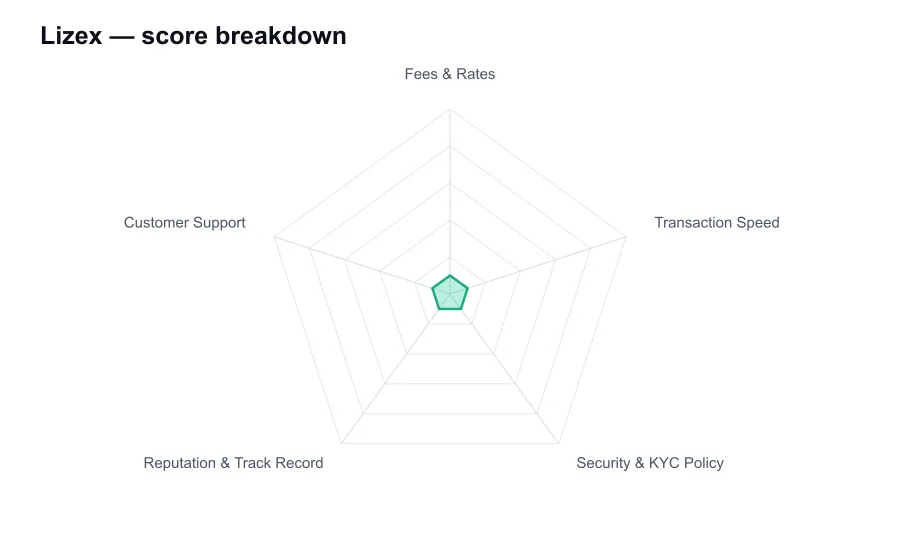
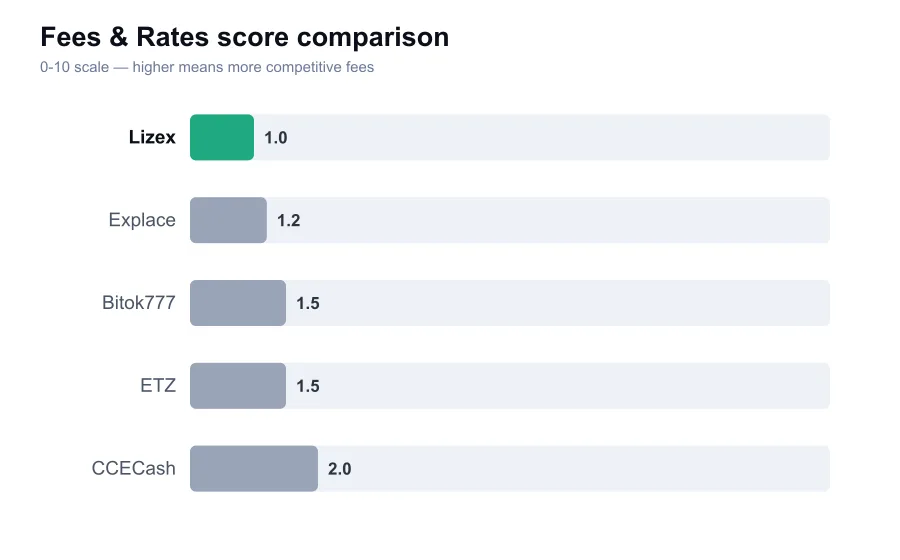
Lizex does not offer enough reliable public material for a normal fees assessment. I could not independently confirm maker and taker charges, instant-conversion spreads, deposit costs, withdrawal fees, minimum withdrawal levels, or whether there are charges hidden in the final quote. Without those details, a low advertised rate means very little. A user may discover the true cost only at withdrawal, and that is exactly the wrong point to learn how a platform operates.
Fee opacity has a second danger. Fraudulent platforms sometimes display profits or trading gains, then prevent withdrawal with invented fees. They may call them tax clearance, anti-money-laundering deposits, account activation, verification charges, or blockchain gas fees. Real network fees are visible as part of a transaction and do not require users to send a fresh payment to a personal wallet or a new deposit address. Any demand of that kind should be treated as a major warning sign.
There is no dependable basis for scoring Lizex highly on transaction speed either. A dashboard can report an order as filled in milliseconds while the only thing that matters, an on-chain withdrawal to an address you control, remains unavailable. For a centralized exchange, operational speed means deposits are credited accurately, orders execute as advertised, and withdrawals are processed within stated windows. I could not find enough credible, independent evidence that Lizex consistently meets those standards.
If you encounter a Lizex-branded platform through a social-media investment group, a dating contact, a signal seller, or an unsolicited support agent, assume the risk is heightened. These channels are frequently used to push victims toward fake exchanges. The pattern often starts with a small apparent profit and ends with pressure to increase the deposit. A genuine platform does not need strangers to coach you through funding an account, nor should it promise guaranteed returns from crypto trading.
Security cannot be inferred from a logo or SSL padlock. Every basic website can use HTTPS. What users need to see is evidence of account controls, clear custody arrangements, incident disclosure practices, and a defined legal entity responsible for the service. I could not verify whether Lizex supports robust two-factor authentication, withdrawal allowlists, device controls, anti-phishing features, cold-storage procedures, or independent reserve reporting. A platform that is hard to identify cannot be treated as secure by default.
The KYC position is also unconfirmed. This matters because users may expose identity documents to a provider that has not demonstrated a real privacy policy or responsible data handling. It also matters because an unverified platform can impose surprise verification after it has received funds. Do not provide a passport, selfie, bank statement, or proof of address unless you have established the exact legal entity, its jurisdiction, and its published data practices. Identity theft risk can outlast a bad crypto trade.
Lizex has no verifiable reputation advantage that I can credit. A company might be new and legitimate, but newness is not a reason to trust it with custody. It is a reason to start cautiously, verify more, and use the smallest possible test amount. Here, even the basic evidence needed to call it a newly launched exchange is unclear. There is no meaningful history through market volatility, no confirmed corporate record, and no dependable public reputation to weigh against the risks.
Support is where users often discover the gap between a real service and an opaque operation. An exchange should provide a formal help center, documented ticket channel, account-recovery process, and accessible terms explaining disputes and restrictions. Informal chats are not sufficient. I could not confirm a customer-support framework for Lizex that a user could reasonably rely upon if money was stuck. That is especially concerning because support is the only route available once a centralized platform controls the transfer process.
Anyone who already has funds associated with Lizex should preserve records. Save wallet addresses, transaction hashes, chat messages, email headers, screenshots, and the exact website domain. Attempt only a minimal withdrawal to a self-controlled wallet. Do not install remote-access software at the request of support, and do not share seed phrases or private keys. If the platform asks for another deposit to release funds, document the request and consider contacting local fraud-reporting services or a specialist recovery adviser, while remaining wary of recovery scams.
The safer choice is not complicated. Use a platform with a documented legal identity and a long record of ordinary customer withdrawals. If you want to trade, use an established order-book exchange that serves your jurisdiction. If you want a straightforward swap, choose a recognizable non-custodial service and compare quotes. If you want to hold assets, use a wallet where you control the keys. Each path has trade-offs, but none requires blind faith in an unclear provider.
I would not use Lizex for a first deposit, a trial trade, or a supposedly exclusive opportunity. The absence of verifiable information means the risk cannot be priced properly. It is possible for a provider to improve transparency in future, but users should judge the service that exists now, not promises or promotional claims. Until independently checkable facts appear, Lizex belongs on the avoid list.
My final view is more cautionary than nuanced because the evidence demands it. Lizex has not demonstrated the basics required for a favorable exchange review: transparent fees, proven withdrawals, identifiable security practices, a track record, and accountable support. That does not justify making unsupported accusations, but it absolutely justifies withholding trust. In crypto, there is no prize for being early to an unverified custodian.