SatoshiTango is an Argentina-based crypto platform aimed squarely at the realities of Latin American money. It offers buying and selling of cryptocurrencies, local payment options, wallet services and products designed around regional currencies and remittance-like use cases. In a country where inflation, capital controls and currency restrictions shape everyday financial decisions, crypto is not merely a speculative hobby. SatoshiTango understands that context better than most global exchanges.
The company has been operating since 2014, which gives it a longer history than many regional platforms. That longevity matters in Latin America, where payment companies can disappear, banks can alter policies quickly and international exchanges may reduce local services without much warning. SatoshiTango has built its name through practical accessibility rather than deep institutional liquidity or a world-class professional trading terminal.
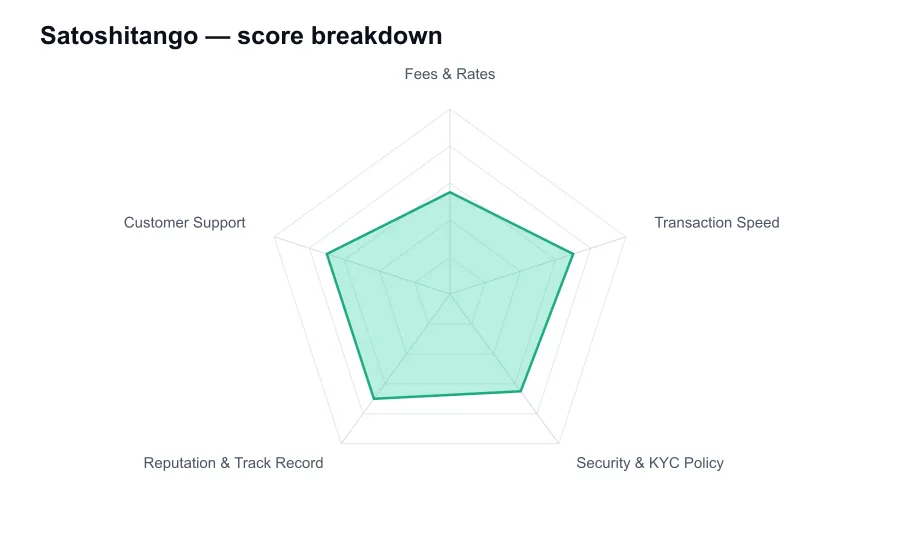
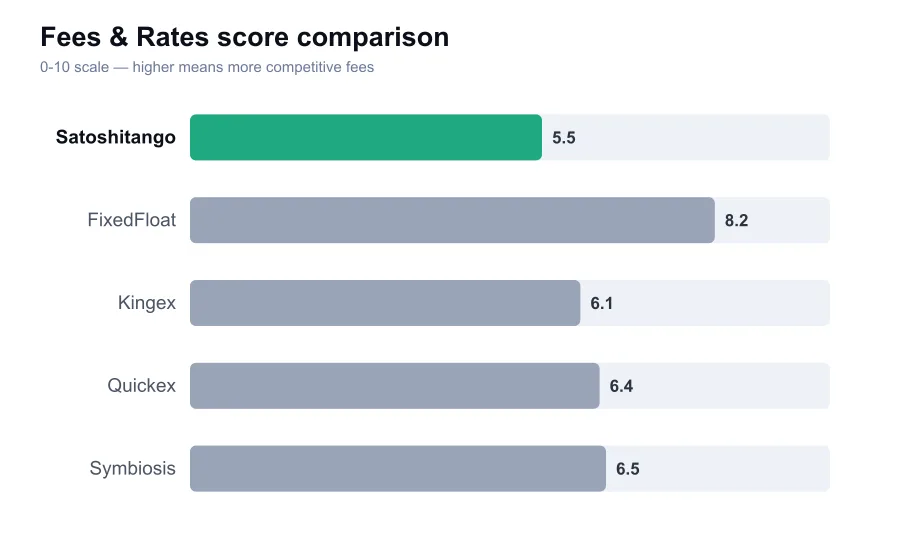
Its fee model requires attention. SatoshiTango commonly presents prices through a brokerage-style experience, where the final quote and spread can matter more than a single headline maker-taker fee. Depending on the payment method, asset and transaction type, costs can be materially higher than trading on a large global exchange's order book. That is not unusual in the region, but users should not assume convenience is free.
The best habit is to compare the displayed buy or sell quote against a broad market reference before confirming. A small purchase may justify a wider spread if local payment access saves time and friction. A larger conversion deserves more scrutiny. The platform is often more compelling for getting funds into or out of crypto locally than for executing a large, price-sensitive Bitcoin trade.
Funding speed is one of its practical advantages for local users. Argentine payment methods and bank transfers can be more useful than trying to force an offshore exchange to work with a domestic banking system. Exact processing times depend on the rail, business hours, verification status and bank checks. Crypto deposits and withdrawals also depend on the selected network, and network choice can sharply affect both cost and speed.
SatoshiTango does not offer the kind of liquidity depth that professional traders expect from Binance, Coinbase Exchange or Kraken. That is the central trade-off. The platform is built for buying, selling, holding and moving crypto, not for algorithmic execution, tight spreads across dozens of pairs or advanced derivatives strategies. A retail user may barely notice this. A trader moving serious size certainly will.
Identity verification is required for normal use, particularly where fiat rails are involved. Customers should expect to submit identification and potentially additional documents for limits, compliance reviews or larger transactions. This is standard for a regulated-facing regional provider, even if it disappoints users who first heard of Bitcoin as a private alternative to banking. A platform connecting local currency to crypto cannot credibly ignore anti-money-laundering obligations.
On security, SatoshiTango provides the familiar protections expected of a custodial crypto service, including account access controls and wallet infrastructure. Users should enable two-factor authentication wherever available, use a unique password and be wary of impersonation messages. The public information available does not place SatoshiTango in the same security-disclosure league as the biggest global exchanges or specialist institutional custodians. That does not mean it is unsafe, but it argues for sensible custody limits.
The basic crypto rule applies with extra force in volatile economies: do not leave a life-changing sum on any trading platform simply because it is convenient. SatoshiTango can be a useful bridge between pesos and digital assets, while long-term holdings can sit in a wallet whose keys the owner controls. Self-custody introduces its own dangers, so this is advice for users willing to manage seed phrases correctly, not a universal instruction.
Its reputation is stronger locally than internationally. SatoshiTango has spent years serving Latin American customers and has expanded services beyond Argentina, but it does not have the universal brand recognition of the global leaders. That can be a weakness for someone seeking maximum liquidity. It can also be an advantage for a customer who wants a provider that understands local payment behavior and Spanish-language support.
Customer support is important here because payment and verification problems can be more complicated than a simple card decline. The platform offers help channels and Spanish-language resources, which is valuable for its core audience. Support quality can be uneven during high-demand periods, as is common across crypto services. Users should keep records of transfer references, transaction IDs and verification documents before opening a ticket.
The product selection is broad enough for ordinary users without becoming an endless casino shelf. That is a sensible editorial choice in a market where many customers are using crypto to preserve value, send money or access dollar-linked alternatives. Still, investors looking for every new decentralized-finance token, options market or staking strategy will find the platform limited. It is a regional financial tool first.
There is also a currency-risk issue that no exchange can solve. Holding stablecoins may reduce exposure to local currency depreciation, but stablecoins have issuer, depegging and regulatory risks of their own. Holding Bitcoin adds substantial market volatility. SatoshiTango can make access easier, yet it cannot turn a volatile asset into a savings account or substitute for understanding local tax and reporting obligations.
I see SatoshiTango as a practical regional gateway rather than a universal recommendation. For Argentinians and other eligible Latin American users who need familiar payment methods and Spanish-language service, it has a legitimate role and a meaningful operating history. For active traders, it is likely too expensive and too shallow. Use it for the problem it solves, local access, then be disciplined about quotes, account security and how much custody risk you accept.