Symbiosis is not a centralized exchange in the WhiteBIT sense. It is a cross-chain liquidity protocol built to let users swap assets between otherwise separate blockchain ecosystems through one interface. Its pitch is simple: instead of manually bridging an asset, changing networks, and then swapping again, a user can request one cross-chain transaction. That makes it part bridge, part decentralized exchange router, and it should be judged as infrastructure rather than as a custodial trading venue.
The service has focused on connecting EVM networks and has expanded support over time to additional ecosystems. A typical use case is moving stablecoins from one chain to another, or taking an asset on Ethereum and receiving a different asset on Polygon, Arbitrum, BNB Chain, Avalanche, or another supported network. The exact route depends on available pools and integrations. Symbiosis is most useful for people already comfortable with wallets, gas settings, token approvals, and the possibility that a transaction may need troubleshooting.
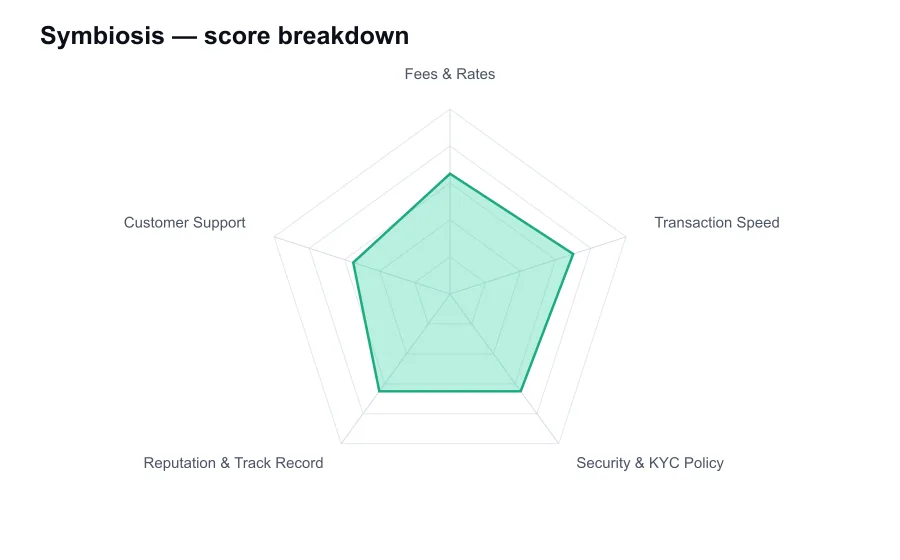
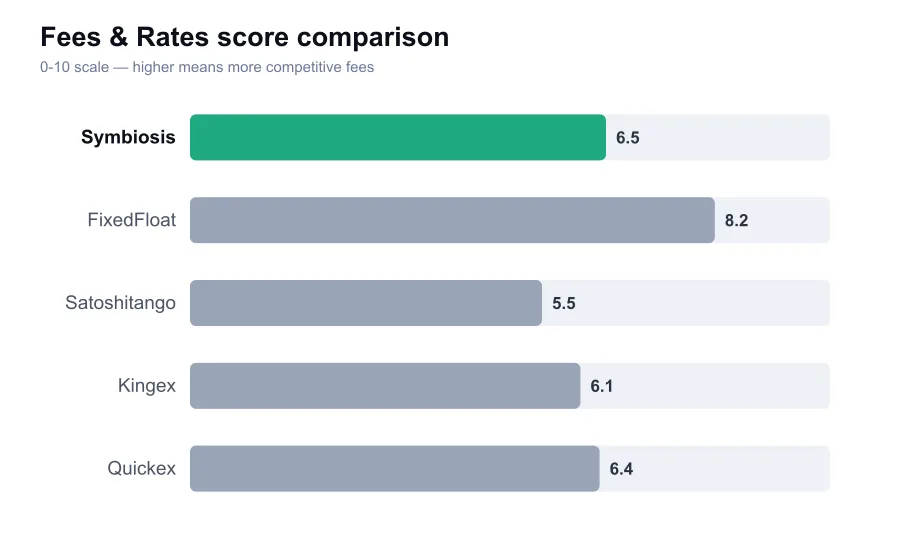
Its fee model is harder to summarize than a centralized exchange's flat maker-taker schedule. A route can include a swap fee from underlying liquidity, a protocol or bridge fee, gas on the source chain, gas provision for the destination chain, and price impact. The interface shows an estimated receive amount before confirmation, which is the number users should actually compare. A stated protocol fee can look small while the full route is expensive because Ethereum gas or shallow liquidity does the real damage.
For stablecoin transfers between cheaper chains, Symbiosis can be reasonably priced and far more convenient than doing each step manually. For small transfers from Ethereum mainnet, it can be poor value. A $30 or $50 swap simply has no room for several layers of gas and routing cost. This is not a unique flaw, but Symbiosis sometimes gets marketed with enough simplicity that beginners may not realize how much the originating chain determines the final cost.
Transaction speed is similarly route-dependent. Once the source transaction confirms, a routine cross-chain swap can complete in minutes, particularly between fast networks with available liquidity. It is slower than swapping within one chain because validators, relayers, and destination execution all have work to do. During congestion, the waiting time can stretch considerably, and a transaction is not fully finished until the destination asset appears in the receiving wallet.
The interface generally makes the process less intimidating than using a bridge and a separate DEX. It asks for the input chain, input token, destination chain, and token to receive, then presents a quote. That is good product design. Still, the user must inspect the network and token carefully. Receiving a wrapped or bridged version of a token is not identical to receiving the native token, and selecting the wrong wallet network remains an easy way to create a stressful support request.
Symbiosis is non-custodial in the narrow, important sense that users connect their own wallet and sign transactions rather than depositing into a company account. There is no normal account registration and no platform-level KYC for using the protocol. That reduces the risk of a centralized operator blocking an account, but it does not remove risk. Smart contracts, bridge architecture, liquidity pools, compromised wallet approvals, malicious front ends, and bad routing are all relevant.
The protocol has published audit information and has used security reviews as part of its public posture. Audits are useful evidence that code received scrutiny, but they are not insurance. Cross-chain systems have historically been one of DeFi's most heavily exploited categories because they combine contracts, external messaging, and high-value liquidity. Anyone describing any bridge as safe simply because it is audited is selling a dangerous half-truth.
A practical security concern is token approval management. Before the first swap, the wallet may ask to approve a token contract. Users should verify that they are on the genuine Symbiosis domain, inspect the transaction in their wallet, and avoid signing blind messages from links in social channels. A hardware wallet helps with key protection, although it cannot tell you whether an approved contract or route is economically wise.
Symbiosis has been active through multiple market cycles and has built recognizable integrations in the cross-chain sector. That gives it more credibility than a fresh bridge with anonymous social accounts and no public history. Yet its reputation is not in the same category as the largest infrastructure names, and the SYMB token's market visibility should not be confused with proof that every route has deep liquidity. Users should assess the route in front of them, not the brand alone.
The protocol's decentralization is a benefit and a limitation. There is no call center capable of reversing a signed transaction. Support is usually delivered through documentation, community channels, ticketing routes, and the project's public communication spaces. That works for a failed quote or a delayed route if you can supply a transaction hash. It is a weak experience for someone who expected a bank-style dispute process.
Documentation is decent on the basic mechanics, but edge cases require patience. A transaction can be pending because the source chain is congested, because the destination gas estimate needs time, or because a route's liquidity changed. Before assuming funds vanished, check the source transaction, the bridge status tool if available, and the destination address on a block explorer. Most problems are visible on-chain, but visibility is not the same as an easy fix.
I prefer Symbiosis for planned cross-chain stablecoin moves where the quoted output beats the alternatives and the transfer is not time-critical. It is not the service I would use blindly for a very large first transaction. Test with a small amount, keep some native gas token on both chains, and compare the output against LI.FI-powered aggregators, Across, Stargate, and the direct bridge route. The cheapest path changes quickly.
Symbiosis solves a real nuisance in DeFi and often does it elegantly. Its strongest feature is the reduction of several technical steps into one wallet flow. Its weakest feature is the category it belongs to: cross-chain routing has unavoidable technical and liquidity risk, and no-KYC convenience means little recourse if the user makes an error. Experienced self-custody users can get good value from it. Beginners should slow down, read each confirmation, and avoid treating it like a simple retail exchange.