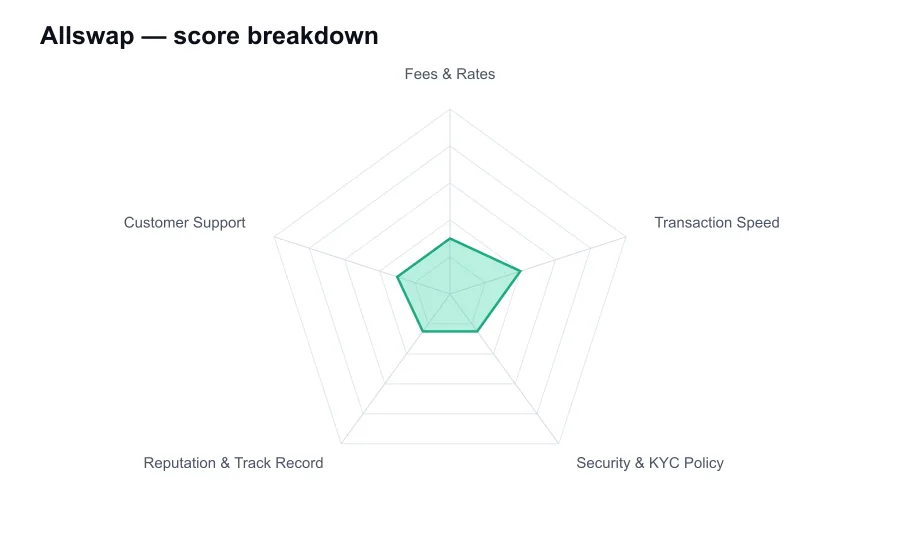
Allswap is a name that requires more caution than the polished branding of a typical exchange. It has been associated with crypto swapping and cross-chain style services, but it does not have the public footprint, transparent corporate profile, or independently documented operating history of a major centralized exchange or established DeFi protocol. That does not automatically make it fraudulent. It does mean a reviewer should refuse to fill the gaps with optimism.
The first problem is basic verification. A trustworthy trading provider should make its legal entity, operating jurisdiction, terms, fees, supported networks, security model, and customer contact route easy to identify. With Allswap, public information has been limited and can be inconsistent across listings, social channels, and similarly named products. A name search can also produce unrelated projects. Users must verify the exact domain and contract addresses before connecting a wallet or sending any funds.
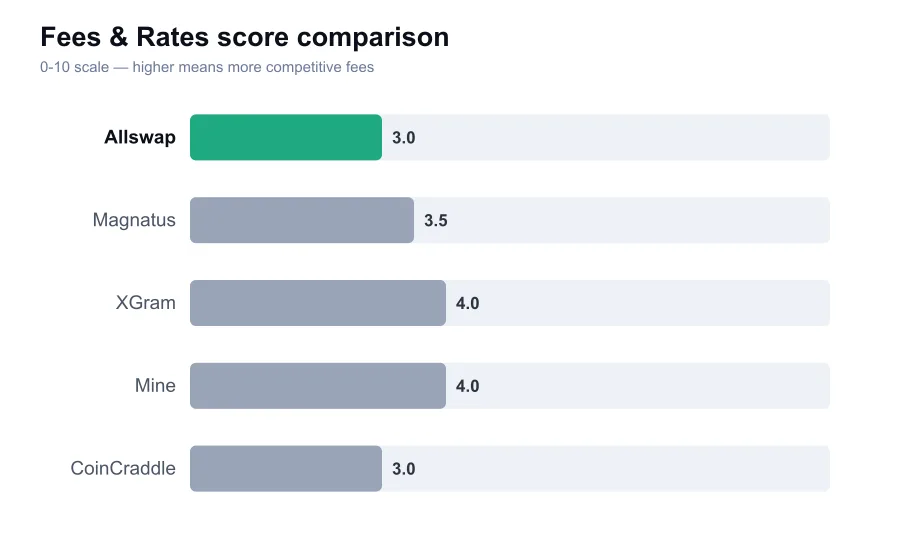
Because the service's current fee documentation is not sufficiently clear or consistently verifiable, I cannot responsibly present a precise flat fee as fact. That alone puts Allswap behind transparent alternatives. A swap provider can charge through an explicit service fee, spread, network fee, liquidity-provider fee, or a mixture of all four. If the final receive amount is not clearly shown before confirmation, the user has no reliable way to tell whether the quote is competitive.
For any instant swap, the only meaningful price test is comparative. Take the same asset, amount, source network, and destination, then request quotes from established alternatives such as 1inch, LI.FI, Changelly, ChangeNOW, or a major exchange's spot market where appropriate. If Allswap cannot beat or closely match the final output after network costs, there is little reason to accept its smaller reputation. A convenient interface does not compensate for a poor quote or uncertain settlement process.
Speed claims are even harder to evaluate without a visible record of completed routes and clear technical documentation. A same-chain swap can settle as soon as the network confirms it. A cross-chain route has more moving parts and might take minutes or longer. No service can honestly guarantee blockchain settlement speed during congestion. Be wary of simple promises such as instant completion if the product is relying on external networks, pooled liquidity, or a manual review step.
The security question is where limited disclosure becomes serious. Does Allswap custody assets, route through smart contracts, use third-party liquidity, or require users to send coins to a deposit address? Each model has a different threat profile. A custodial flow creates counterparty risk. A smart-contract flow creates approval and code risk. A deposit-address model creates a painful recovery problem if the wrong asset or network is sent. Without clear technical documentation, users cannot assess which risk they are taking.
I found no basis to give Allswap the same confidence reserved for a provider with public audits, sustained proof-of-reserves reporting, established licensing, or years of independently observed uptime. Absence of public evidence is not evidence of a breach. It is, however, a valid reason for a low security score. In crypto, transparency is part of security because users need enough information to decide whether the promises can be checked.
KYC policy also deserves a direct answer, and unclear policy is not user-friendly. Some smaller swap sites advertise no registration for ordinary exchanges, then reserve the right to request identity documents if a transaction is flagged by compliance systems. That can be legitimate anti-money-laundering practice, but it must be stated before the customer sends funds. If Allswap asks for documents after taking custody of assets, users need a published process and response route, not vague chat messages.
Reputation is built over time by surviving volatility, processing withdrawals, handling complaints openly, and maintaining a consistent public identity. Allswap does not offer enough widely verifiable evidence in those areas for me to recommend it for meaningful sums. I would place it far below established exchanges such as Kraken, Coinbase, or WhiteBIT for a fiat-to-crypto purchase, and below mature self-custody routers for a cross-chain transaction. That is not snobbery. It is risk pricing.
The issue is not that a smaller provider cannot be good. Some excellent crypto products began with little name recognition. The difference is whether the project can show its work. Published contracts, reputable audits, active developer documentation, a clear legal notice, real incident communication, and an accessible status page all help. A glossy landing page, influencer posts, or a few favorable review snippets do not provide the same evidence.
Support is difficult to praise where the public support structure is not robustly documented. A reliable provider should have a clear ticket method, published response expectations, an official help center, and a way to distinguish staff from impersonators. If support lives mainly in Telegram or Discord direct messages, that is a fraud risk rather than a benefit. No legitimate agent should ask for a seed phrase, private key, or remote device access.
Anyone determined to test Allswap should use a wallet holding only a small amount, begin with the minimum viable transaction, and record every address, quote, transaction hash, and screenshot. Do not grant unlimited token approvals if a limited approval is available. Do not send a large amount directly to a deposit address after seeing one successful small swap. Test success proves only that one route worked once.
There are also safer ways to get the same job done. For regular buying and selling, a regulated exchange with transparent pricing is the rational choice. For on-chain swaps, established aggregators let users compare routes while retaining wallet control. For bridging, use protocols with clear documentation, public audits, and enough usage history to generate independent reporting. None of these options eliminates risk, but they reduce the number of unknowns.
My position is blunt: Allswap has not earned a recommendation for substantial funds. It may be usable for a tiny experimental transaction after careful verification, but the burden of proof is on the provider, not the customer. Until there is clearer evidence on ownership, fees, security architecture, support, and completed operational history, the sensible rating remains conservative. In crypto, the cheapest-looking route can become the most expensive one if funds get stuck.