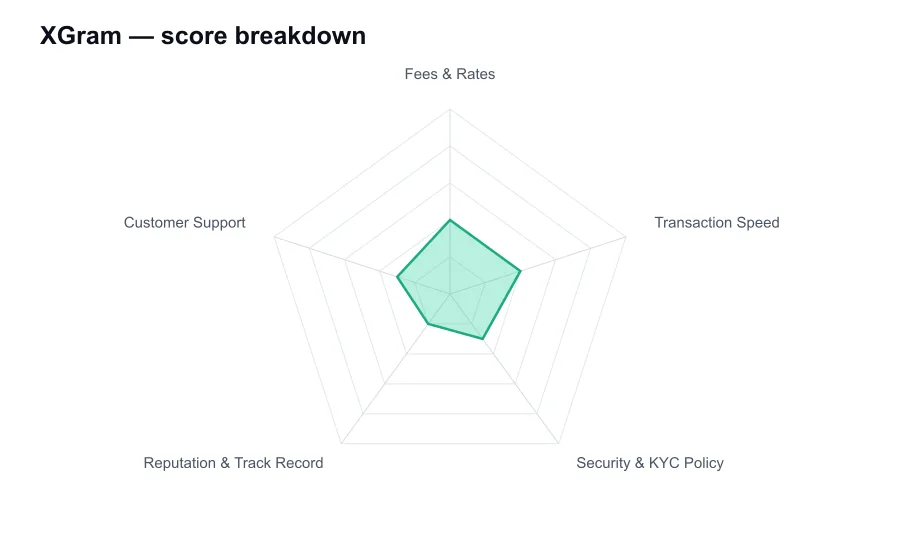
XGram appears to sit in the crowded instant-swap end of the crypto market, where a user chooses two assets, sends a deposit, and receives the converted coin without opening a conventional trading account. That format can be useful, particularly for a one-off wallet-to-wallet conversion. The problem is that XGram does not have the public footprint, established licensing profile, or independently documented operating history that would make me comfortable treating it like a mature exchange.
The site experience may look simple, but simplicity is not the same thing as transparency. A crypto converter handles irreversible transfers, so the important questions are not just whether the swap form loads. Who runs it? Where is the company incorporated? What assets are held during a swap? What happens if an automated compliance check stops a transaction? Publicly verifiable answers should be easy to find. With XGram, they are not sufficiently clear.
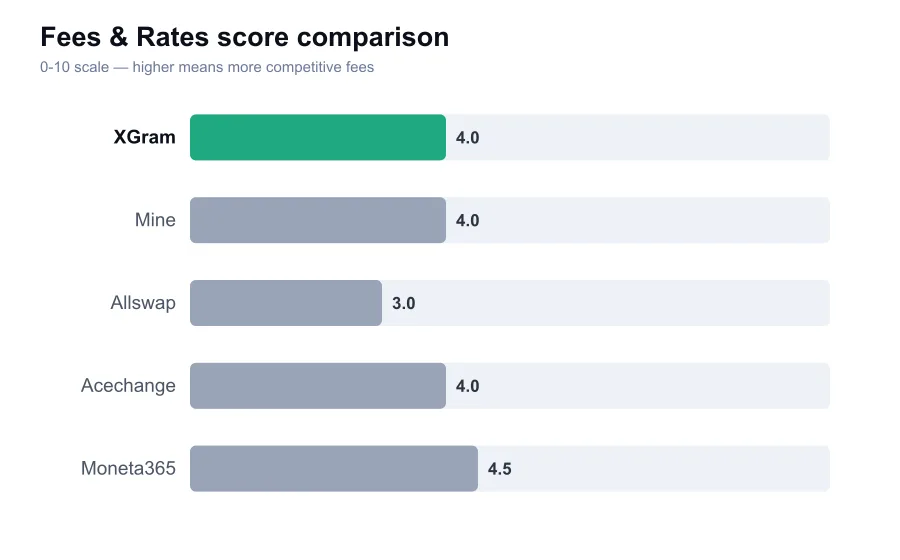
Fees are the first area where that lack of clarity matters. An instant-swap provider can build its margin into the quoted exchange rate, charge a stated service fee, or do both. A low headline rate means little if the final destination amount is materially below the rate available through established alternatives such as ChangeNOW, SimpleSwap, or a major exchange's spot market. XGram does not provide enough independently verifiable pricing history for me to call it cheap.
That does not mean every quote will be poor. Small swaps can sometimes produce an acceptable result, especially in highly liquid pairs such as BTC to USDT or ETH to USDC. But users should compare the exact receive amount, not the advertised rate. Check at least two alternatives before sending funds, then include the blockchain network fee in the calculation. This is especially important for thinly traded tokens, where provider spreads can quietly become expensive.
Fixed-rate swaps deserve extra caution. A fixed quote can protect a user from price movement during confirmation, but only if the provider genuinely honors it and states its deposit window, rate tolerance, and refund process. If XGram offers a floating quote, the final amount can move while the deposit waits for network confirmations. That is normal market mechanics, but it must be explained clearly. I would not send a large amount without reading those terms line by line.
Speed is similarly hard to grade with confidence. On-chain swaps are never instant in the literal sense. Bitcoin deposits can take from minutes to an hour or more depending on fee conditions, while Ethereum and Tron transfers often settle faster. After that, the provider still has to process the order and broadcast the outgoing transaction. A well-run service normally gives a transaction ID, status updates, and a realistic explanation of delays.
XGram's challenge is that there is little broad, independent evidence showing how it performs during congestion, wallet maintenance, or compliance holds. Happy-path speed is easy for any swap service to demonstrate. The real test is an order that needs manual attention. That's where long-established operators have a record, support archives, and many public user reports. XGram does not yet offer that comfort.
The privacy angle needs plain language. A service may allow a customer to begin a swap without account registration, yet still reserve the right to request identity documents under anti-money-laundering controls. Those are very different things. No-account access should never be read as a guarantee that a transaction cannot be paused. Users who need a clearly documented KYC policy should choose a provider whose verification triggers and review process are published in detail.
Security is about operational behavior as much as technical branding. A legitimate exchange service should publish clear terms, a privacy policy, supported-network warnings, deposit-address instructions, and a way to validate the official domain. It should also warn users that sending on the wrong network can be unrecoverable. I could not find enough strong third-party material about XGram's custody controls, incident response, or corporate accountability to rate it highly.
That uncertainty should affect position size. Testing a new service with a small amount is prudent, but it is not a substitute for due diligence. Never use an unfamiliar converter as temporary storage, never send the whole balance of a wallet, and never assume a support agent on Telegram is genuine. Bookmark the official site once verified, use a hardware wallet where practical, and retain screenshots of the quote and transaction hash.
Reputation is XGram's weakest area. There is a difference between a new company and an unknown one, and a new company can earn trust through named operators, a registered entity, security disclosures, and responsive public support. XGram has not built a sufficiently visible record on those points. I would not equate a polished swap interface with the years of observable operation behind better-known platforms.
Support is also difficult to assess before a problem occurs. A contact form or chat bubble is not enough. Users need an escalation path for a stuck order, a mistaken memo tag, a delayed payout, or a compliance request. The best services publish response expectations and provide a ticket number. Until XGram demonstrates that sort of accountable support trail, its customer service should be treated as unproven rather than dependable.
For a technically confident user making a very small, non-urgent conversion, XGram may be worth examining after checking the quote and site identity carefully. It is not a service I would choose for a first crypto purchase, a large BTC swap, or funds tied to a deadline. The lack of established public evidence outweighs any convenience gained from a streamlined no-account flow.
My view is blunt: XGram has not earned a trust premium. It may process ordinary swaps without issue, but the available public signals do not justify assuming that it will handle an exception well. Better-known competitors can also be imperfect, yet they usually provide more evidence of pricing, support, and operating history. Until XGram becomes materially more transparent, keep transactions small or look elsewhere.