CoinCraddle presents the kind of name that invites a basic question before any talk of rates or supported coins: can a prospective customer independently establish who is behind it and how long it has operated? In crypto, that question is not pedantic. It is central. An exchange or swap provider can receive assets that cannot be recalled, so users need much more than an attractive landing page and a promise of fast settlement.
I could not identify a strong, widely documented public record for CoinCraddle comparable to the record available for established exchanges, regulated regional brokers, or large noncustodial swap brands. That does not prove misconduct. It does mean there is not enough evidence to give the service the benefit of the doubt. A provider seeking customer deposits should make its legal entity, terms, policy documents, and support routes easy to verify.
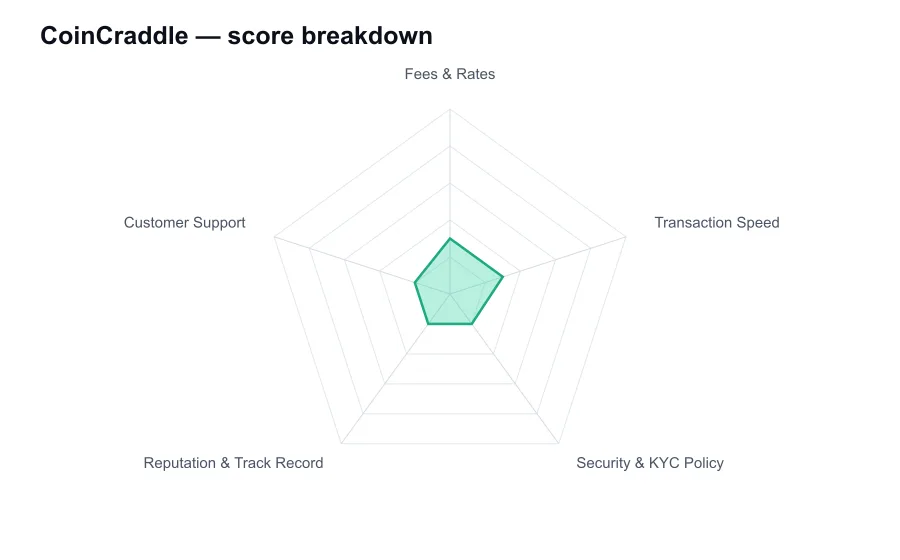
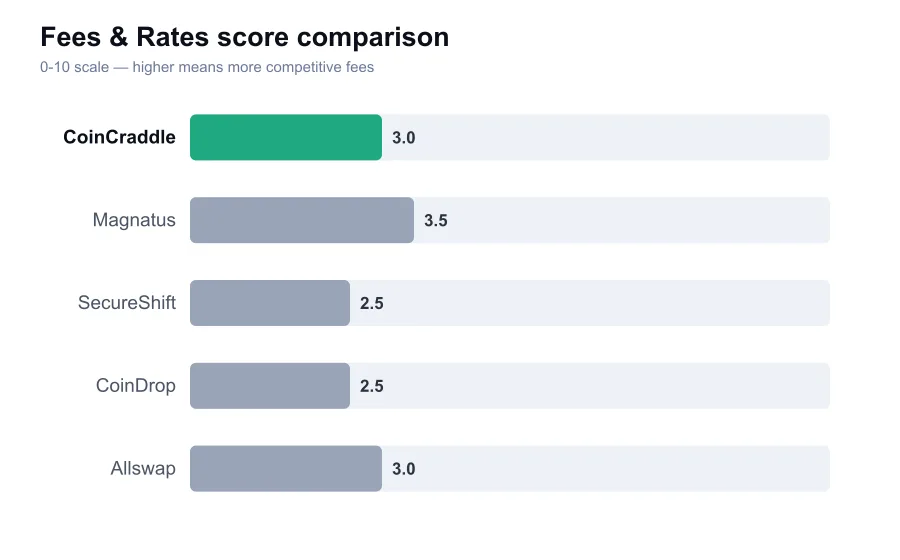
Pricing is particularly hard to evaluate in this situation. Some smaller converters advertise zero fees, then recover revenue through a wide exchange-rate spread. Others show a fee separately but offer a more competitive all-in payout. The only figure that matters is the exact amount that reaches the receiving wallet. CoinCraddle does not have enough durable, independent quote data for me to treat any fee claim as established fact.
If a user still wants to inspect CoinCraddle, the sensible method is mechanical. Pick a liquid pair, obtain the live receive amount, record the network and expected payout, then compare it with an exchange order book and two recognized swap providers. Do not rely on a percentage shown in promotional copy. For stablecoin swaps, even a modest spread can be obvious. For illiquid assets, it can be severe.
Network charges also deserve attention. A service may have no visible platform fee while using an expensive route for the outgoing transaction or imposing a minimum amount that makes a small swap uneconomic. Bitcoin, Ethereum, Tron, Solana, and various layer-two networks have very different transfer conditions. A competent provider documents those limits plainly. Ambiguous minimums, missing network details, or a quote that changes without explanation are reasons to stop.
Speed claims should be treated with the same discipline. There is no magic way around blockchain confirmation times, liquidity sourcing, or manual checks. A fast service may complete common pairs in minutes, but that can turn into hours during wallet maintenance or a compliance review. CoinCraddle has not developed the public user-report history needed to judge whether its advertised flow remains dependable after the easy cases.
A status page, transaction tracker, and payout transaction hash are useful signs, but they are not complete proof of good operations. The harder questions are whether the provider communicates during a delay, whether it can explain a partial fill, and whether it returns funds promptly if a swap cannot be completed. Those answers require a visible service record. I did not find enough of one to score CoinCraddle generously.
Security language often sounds impressive while revealing little. Saying that a platform uses encryption, for example, tells a customer almost nothing about wallet controls, access management, transaction monitoring, or incident response. For a custodial platform, proof of reserves and a regulated operating structure would matter. For a noncustodial swap service, transparent routing, clear refund terms, and a credible corporate identity matter enormously.
CoinCraddle also needs to be judged on how it handles KYC. Identity verification is not automatically bad. It can be necessary for legal compliance and may protect a platform from abuse. The issue is surprise verification after a user has already sent funds. A fair provider explains whether KYC may be requested, what documents can be required, who reviews them, and how long a review can take. Vague policies are unacceptable for irreversible transfers.
I would be cautious about any marketing that frames anonymity as certainty. No serious crypto service can guarantee that every transaction will avoid checks. Wallet screening, sanctions controls, and fraud prevention can lead to holds even on services that do not require account creation at the start. Users should never send funds they cannot afford to have unavailable while a review takes place.
CoinCraddle's reputation score is low because reputation is earned publicly over time. That includes independent reviews with detail, constructive responses to criticism, documented uptime, clear legal notices, and a history of resolving awkward cases. A few short ratings or social posts are not enough. They can be genuine, copied, incentivized, or simply too thin to mean much. There is no substitute for a broad and sustained record.
Support is where unknown platforms can become expensive. A missed destination tag, an incorrectly selected network, or a delayed payout needs a human response with access to the transaction record. Before using CoinCraddle, a customer should test whether support can be reached through an official ticket channel and whether the site explains its response process. Do not disclose seed phrases, private keys, or remote-device access to anyone claiming to help.
The practical use case, if any, is a small experiment by an advanced user who has independently verified the live domain and accepts the risk. It is not suitable for a payroll conversion, a business treasury movement, an urgent stablecoin transfer, or a first-time crypto user. Those customers need documented protection and reliable recourse, not a leap of faith.
CoinCraddle has not supplied enough public evidence to overcome the risks that come with a little-known crypto service. Its potential convenience does not compensate for the weak transparency picture. I would rather use a recognizable provider with a clear quote and proven support than chase a marginally better rate here. Trust has a price, but so does getting stuck with an unanswered transaction.