Independent Reserve is one of the more established fiat-to-crypto exchanges serving Australia, Singapore and selected international customers. Founded in Sydney in 2013, it occupies a sensible middle ground between a beginner-friendly broker and a serious trading venue. It is not trying to be Binance, and that restraint is part of its appeal. The platform is built for people who want bank transfers, named accounts, proper compliance and a business that has survived several crypto cycles.
The first impression is deliberately conservative. Independent Reserve's interface is clean, its asset list is selective, and its marketing rarely leans on meme coins or unrealistic yield promises. That can feel dull beside the endless product menu at Coinbase or Crypto.com. For an Australian investor putting meaningful money into Bitcoin, Ether or a handful of large altcoins, dull is often exactly the point.
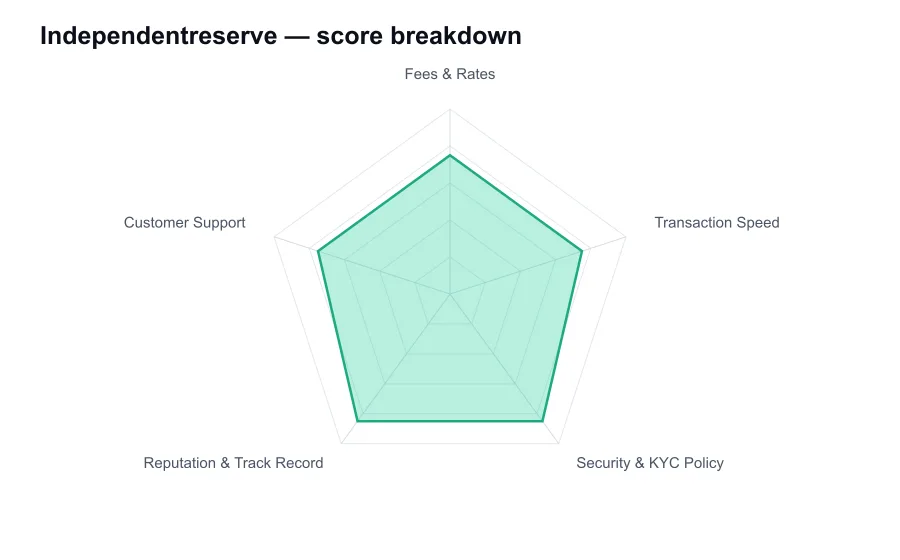
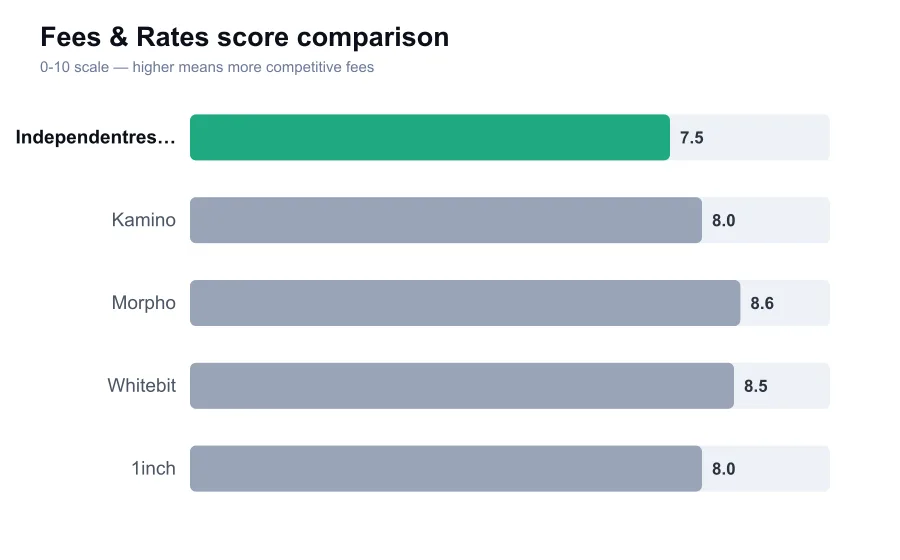
Its fee schedule is among the better features. Standard spot trading starts at 0.5 percent and declines with 30 day trading volume, reaching 0.02 percent for very high volume users. That base rate is competitive for a local exchange, though it is not the cheapest route for an active trader. Kraken Pro, Binance and OKX can offer lower published maker and taker rates, particularly once someone is comfortable using advanced order books.
The important distinction is between the exchange rate and the all-in cost. Independent Reserve generally does a decent job of displaying its trading fees, but users should still check the order book and the withdrawal charge before hitting buy. Thin liquidity in smaller markets can cost more than the stated commission. Bitcoin and Ether pairs are usually the most practical place to trade, while less familiar tokens deserve a limit order rather than an impatient market order.
Australian dollar deposits via bank transfer are normally straightforward, and this is where the platform earns much of its loyalty. A domestic transfer is usually processed once funds clear, commonly on the same business day and often faster through modern Australian payment rails. Withdrawals to an account in the customer's own name are typically efficient, although bank compliance checks can add delay. It is a regulated financial service, not an instant cash machine.
Trade execution is good enough for investors and routine traders, not for people trying to scalp volatile markets. The order book, market orders, limit orders and conditional orders give it more substance than a simple brokerage app. During sharp market moves, liquidity and spreads remain the real constraint. Independent Reserve does not have the depth of the world's largest exchanges, so a large order should be split or worked with limits.
Security is a major reason to consider it. The company uses cold storage practices, multi-signature arrangements and account controls such as two-factor authentication. It has also pursued ISO 27001 information security certification, a meaningful sign of operational discipline even though no certification makes a crypto platform risk-free. Crypto exchanges still carry custody, counterparty and cyber risk, and customers should not confuse a polished compliance posture with a bank guarantee.
Identity verification is mandatory for usable accounts. Expect to provide personal identification, proof of address and, for some transactions or corporate accounts, additional source-of-funds information. Some privacy-focused crypto users will dislike that. I think it is appropriate for a fiat-connected exchange that wants banking relationships and regulatory credibility. If avoiding KYC is a priority, Independent Reserve is plainly the wrong venue.
The firm is registered with AUSTRAC in Australia and has operated under relevant local regulatory frameworks in the markets it serves. Its long survival matters. Australia has seen local exchanges disappear, freeze withdrawals or get acquired after difficult periods. Independent Reserve has been around since 2013 without becoming a household name for the wrong reasons, which is a stronger recommendation than flashy advertising.
Its reputation is also helped by the kind of users it attracts. Self-managed super funds, businesses and longer-term investors tend to value the exchange's reporting, tax tools and account structure. Features such as SMSF support and recurring purchases make it more practical for a portfolio than a speculative trading playground. The limited coin catalogue is a trade-off, but it also reduces the chance that users are pushed toward whatever token is being aggressively promoted this week.
Customer support has a respectable reputation by crypto-exchange standards. There are help articles, email support and local-facing service channels, and the team understands Australian banking questions better than many offshore competitors. That said, do not expect a personal relationship manager on a standard retail account. Verification reviews and withdrawal checks can be frustrating when markets are moving quickly, especially if documents need to be resubmitted.
The mobile and web experience is functional rather than beautiful. That sounds like faint praise, but it is better than a stylish app that hides fees, confuses order types or makes account recovery difficult. Independent Reserve's platform feels designed by people who expect users to check details. Beginners can use it, though they should spend ten minutes learning the difference between an instant purchase, a market order and a limit order.
There are weaknesses beyond the smaller token range. Advanced traders may miss derivatives, deeper liquidity, rich charting and the broad API ecosystem available elsewhere. International users should also verify what products and payment methods are available in their country rather than assuming the Australian experience applies everywhere. The exchange is strongest inside its core markets, not as a universal crypto destination.
My view is that Independent Reserve gets the priorities mostly right. It is not exciting, it is not the cheapest for every trade, and it will not satisfy the person chasing perpetual futures at 3 a.m. But for someone who values local banking access, clear compliance and a platform with a real operating history, it is one of the stronger Australian choices. Use limit orders, enable two-factor authentication, and keep long-term holdings in self-custody if they are more than you can afford to leave with an exchange.