Morpho is one of the most consequential lending protocols in DeFi, even though it does not feel like a conventional exchange. It is a permissionless lending layer where users supply assets, borrow against collateral, or deposit into curated vaults. The current Morpho design, commonly called Morpho Blue, moved away from the pooled model popularized by Aave and Compound. Instead, lenders and borrowers interact through isolated markets defined by a loan asset, collateral asset, oracle, interest-rate model and liquidation threshold.
That architecture is the key to understanding both Morpho's appeal and its danger. Isolated markets can avoid spreading one market's bad debt across an entire pool. They also make it possible to create very targeted lending markets. The catch is that somebody must choose sensible parameters, reliable price feeds and appropriate collateral. Morpho gives users freedom, then asks them not to misuse it.
Most everyday users do not lend directly into an empty market. They use MetaMorpho vaults, now often simply called Morpho Vaults, managed by curators such as Gauntlet, Steakhouse Financial, Re7 and others. A curator allocates deposited assets across approved Morpho markets within stated limits. This can be an excellent experience, but it introduces manager risk. The vault is not a neutral savings account, and its curator's choices matter.
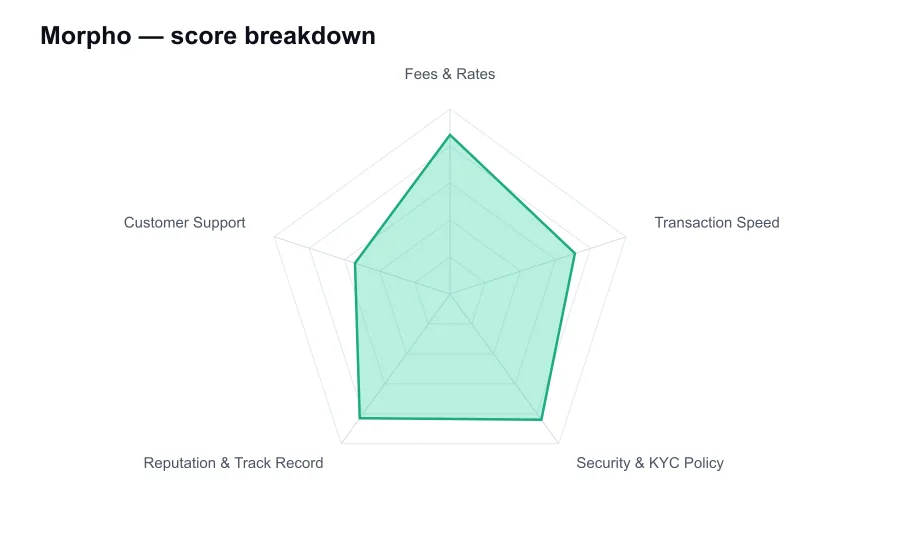
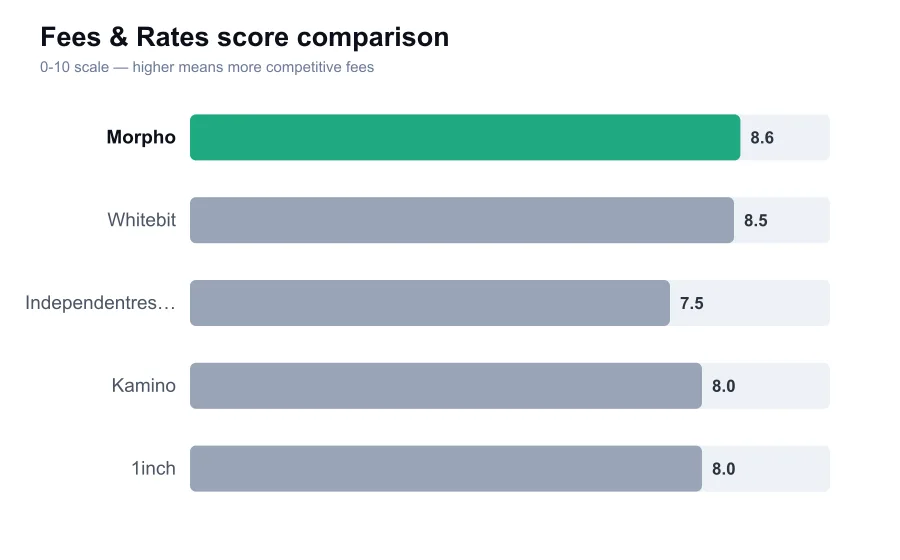
Fees are unusually flexible. Morpho Blue itself is designed with no protocol fee on borrowing or lending interest. A vault curator can charge a performance fee on generated interest, and that fee is set by the individual vault. Borrowers pay variable interest rates determined by the market's interest-rate model, not a blanket platform rate. Ethereum gas costs remain relevant, especially for smaller deposits or position adjustments.
This is cheap at the protocol layer, but it is not automatically cheap for every user. A vault with a meaningful performance fee, an expensive mainnet transaction, and a modest deposit can be worse value than a large pooled lender. Read the vault page, identify the fee recipient and inspect the stated fee before depositing. Morpho's fee flexibility is a feature for informed users and a trap for people who assume all USDC vaults are interchangeable.
Borrowing rates can be very competitive because markets are isolated and capital is directed with precision. Yet that precision can also lead to shallow liquidity. A borrower may see an attractive annualized rate, only to find that the market cannot support the desired size without pushing utilization sharply higher. Aave remains easier for many borrowers because its major pools are deep, standardized and familiar. Morpho often rewards users who are willing to do more homework.
Transaction speed is largely the speed of the host chain. On Ethereum mainnet, confirmation is normally measured in seconds to minutes, and execution can cost real money at busy times. Morpho deployments on networks such as Base improve the small-user experience considerably, with lower fees and quick block times. Still, this is not a centralized exchange where an internal ledger instantly updates. Deposits, withdrawals, liquidations and changes to vault allocations are onchain operations.
Withdrawals are normally straightforward only while a vault has idle liquidity or can withdraw from its underlying markets. If borrowers have used most available funds, a lender may need to wait for repayments or for a curator to reallocate. This is a fundamental lending risk, not necessarily a malfunction. Anyone calling a DeFi lending vault a guaranteed instant-access account is selling the wrong idea.
Morpho's security design deserves respect. The immutable, minimal Morpho Blue contracts reduce governance attack surface compared with endlessly upgradable lending systems. Markets are isolated, so a failure in one should not automatically poison every other market. The code has been extensively reviewed and the project has run bug bounty programs. This is serious protocol engineering, not a weekend fork.
But Morpho delegates major judgment calls outward. Oracle selection, collateral parameters, interest-rate curves and curator allocation limits are not cosmetic details. A poorly configured market can be dangerous even if the core contracts work exactly as designed. Borrowers also face liquidation. If collateral crosses the threshold because of a price move, liquidation can be swift and expensive. No KYC is generally required at protocol level, but open access does not reduce financial risk.
Morpho has earned a strong reputation among DeFi builders and sophisticated capital allocators. Its earlier peer-to-peer optimization work and its later Blue architecture both showed original thinking. The protocol has attracted substantial deposits and respected curator integrations. Even so, it lacks the decade-like battle testing of traditional finance and has a shorter mass-market history than Aave. The name is established, the risk is not obsolete.
Support is the weak point. Documentation, Discord, governance forums and curator-specific channels can be good if you know the exact market and transaction involved. They are not a substitute for a staffed brokerage help desk. If you deposit into the wrong vault or borrow too aggressively, there is no account manager who can unwind the position. That is not a Morpho-specific failure, but users should treat it as part of the product.
Morpho is best used with deliberate position sizing. Lenders should choose curators, study vault holdings and understand withdrawal conditions. Borrowers should leave a meaningful safety margin rather than targeting the maximum permitted loan. The clean interface can conceal how technical the product really is. It is more like operating a money market instrument than using a savings app.
I rate Morpho highly because it pushes DeFi lending in a smarter direction than broad, one-size-fits-all pools. Its low core fee structure, isolated markets and modular vault system are genuine advantages. Yet users must assess curators and market parameters, not merely trust the Morpho name. For advanced lenders and disciplined borrowers, it is among the best tools available. For someone seeking a protected cash account, it is plainly the wrong category of product.