Kamino is one of Solana's leading DeFi hubs, combining lending, borrowing, liquidity vaults and automated strategy products in one interface. Its core lending product, Kamino Lend, competes most directly with Solend and Marginfi. The broader platform also gives users access to concentrated liquidity management, swaps and yield-oriented vaults. That breadth is useful, but it means Kamino should be evaluated as a suite of distinct risk products rather than one simple service.
The lending side is the main reason many users arrive. Deposit SOL, USDC, USDT, JitoSOL, mSOL or other supported collateral, earn supply interest, or borrow against it. The interface presents loan-to-value figures, liquidation thresholds and estimated rates clearly enough for an active Solana user. It is one of the better-designed borrowing dashboards on the chain, and that matters during volatile markets.
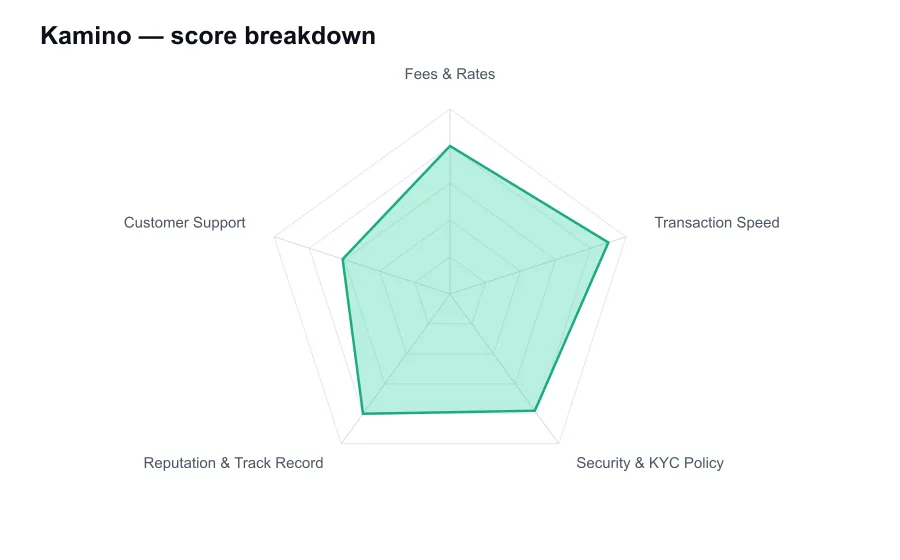
Kamino's strongest practical advantage is speed. Solana confirmations are normally fast and inexpensive, so deposits, repayments and collateral adjustments can be completed in seconds for a tiny network fee. A user trying to protect a borrowing position has a much better chance of acting quickly than on congested Ethereum mainnet. That said, Solana itself has experienced outages and periods of transaction congestion. Fast-chain convenience should not be confused with guaranteed availability.
Lending rates are variable and react to pool utilization. That is normal, but users should not interpret the displayed annual percentage yield as promised income. If borrowing demand drops, supply yield can fall quickly. If utilization rises sharply, borrower costs can jump. Kamino's interface makes the live numbers easy to see, though it cannot make them predictable. Borrowers should model a higher interest rate than today's dashboard suggests.
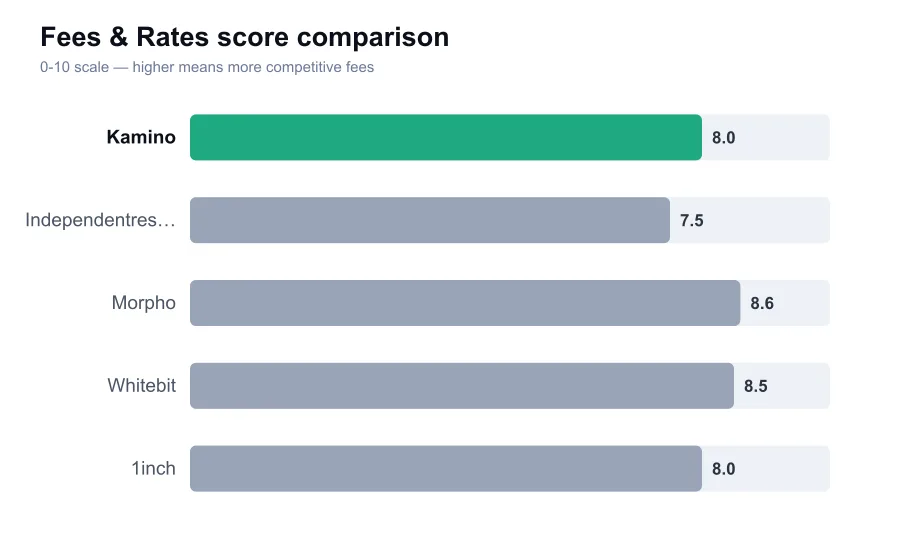
Fees are reasonable, but they are not a single flat figure across every product. Lending and borrowing costs depend on reserve settings, interest-rate curves and sometimes protocol or reserve fees. Liquidators receive incentives when positions fall below required health levels, which is a cost borne by risky borrowers. Automated liquidity vaults also have strategy-specific economics, including management or performance-related fees where applicable. The right habit is to inspect the exact reserve or vault before committing funds.
For ordinary users, Solana's low transaction cost is a meaningful financial advantage. Moving collateral several times on Ethereum can cost more than a smaller user earns in lending interest. On Kamino, managing a position actively is usually affordable. This makes the protocol more accessible than an Ethereum money market for modest accounts, although inexpensive transactions can also encourage users to overtrade and over-adjust positions.
Kamino's automated liquidity products deserve separate caution. Concentrated liquidity can generate attractive fee income, but it requires positions to remain in an active price range. Kamino's vaults automate rebalancing and strategy management, reducing the manual work found on Orca Whirlpool or Raydium concentrated liquidity positions. They do not remove impermanent loss, token volatility or strategy risk. Automation is helpful, not protective.
The protocol is non-custodial and ordinarily does not require KYC. Users connect a Solana wallet and interact directly with smart contracts. This is a welcome contrast to centralized lending products that demand identity documents and custody of assets. It also means Kamino cannot retrieve assets sent incorrectly or protect a user whose wallet approval process is careless. Wallet security is part of the operating model.
Security looks serious by Solana DeFi standards. Kamino has used third-party audits, operates a bug bounty program and has built a reputation for professional risk management. Its lending markets use reserve parameters and oracle-based pricing, with mechanisms intended to limit unsafe behavior. The protocol has also become a major destination for Solana DeFi liquidity, which brings continual scrutiny from traders, researchers and competitors.
Still, lending risk does not disappear because a dashboard looks polished. Oracle failures, smart-contract bugs, volatile collateral, liquidity gaps and Solana network issues can all affect a position. A borrower holding volatile SOL collateral against a stablecoin loan can be liquidated quickly in a sharp move. Liquidation is not a rare edge case in crypto. It is the core enforcement mechanism of collateralized onchain lending.
Kamino's reputation is stronger than many newer Solana protocols because it has stayed relevant through changing market conditions rather than relying solely on a token launch. It has meaningful adoption, recognizable integrations and a credible place in the Solana DeFi stack. I rate its track record below the oldest Ethereum blue chips simply because Solana DeFi has had fewer long, hostile market cycles and the protocol's scope is broad. But among Solana-native options, Kamino is near the front of the pack.
Customer support is adequate for crypto users, not exceptional for everyone else. Documentation and Discord are the usual first stops, while the team and community can often help diagnose a transaction or interface issue. There is no bank-like customer service layer, and responses can be uneven during busy periods. Users should save transaction signatures and screenshots before asking for help. Vague messages such as "my money is gone" are difficult for any onchain support channel to resolve.
The KAMINO token and governance incentives have helped build engagement, but they can also distort behavior. High token-related returns draw capital into strategies that may not make sense after rewards decline. This is not unique to Kamino, yet it is a recurring Solana DeFi pattern. Separate base lending yield, swap fees and token incentives before deciding whether a position is actually attractive.
Kamino works best as a practical onchain finance toolkit. A conservative user can supply a major stablecoin or liquid staking asset, monitor utilization and keep expectations modest. A sophisticated user can borrow, hedge, or use automated liquidity strategies with proper risk limits. The same interface serves both people, but their outcomes can be wildly different. The product is accessible, while the risk management remains advanced.
My verdict is favorable, with a clear warning against complacency. Kamino offers fast, low-cost lending and some of Solana's best integrated DeFi tools. It has earned a better reputation than many short-lived yield platforms, and its design is more mature than the average incentive farm. Yet borrowing, leverage and automated liquidity vaults remain risky even on a good protocol. Use Kamino for efficient Solana DeFi, not as a substitute for a guaranteed savings account.