Liquity is not a conventional crypto exchange, and judging it by the standards of Coinbase or Kraken would miss the point. It is an Ethereum lending protocol built around borrowing stablecoins against ETH collateral. Its first major product issued LUSD, while Liquity V2 introduced BOLD, a stablecoin backed by user-managed ETH positions. The appeal is simple, users keep exposure to ETH while unlocking liquidity without asking a bank or handing control of coins to a centralized lender.
That design puts Liquity in a rare corner of DeFi. It is closer to MakerDAO than to a swap app, but its original version was deliberately stripped down compared with Maker's broad collateral menu and governance-heavy structure. Liquity historically accepted ETH only, required a minimum collateral ratio of 110 percent, and charged no recurring interest on LUSD loans. That was a powerful proposition during periods when centralized lenders were charging steep rates for volatile, custodial credit.
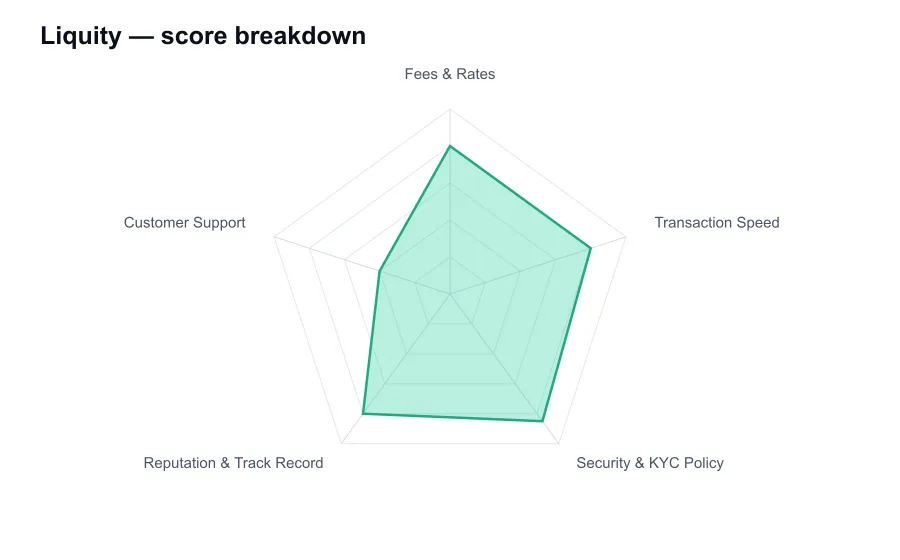
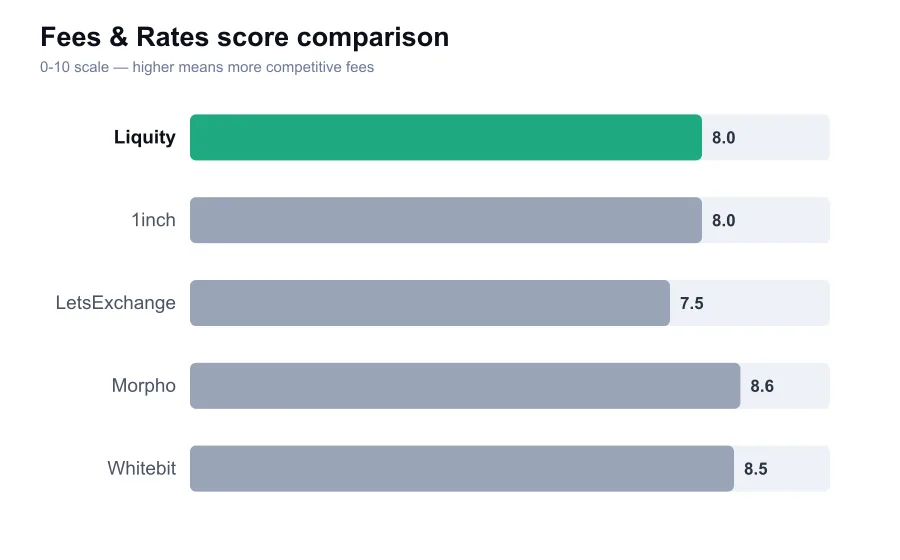
The headline fee on Liquity V1 was a one-time borrowing fee, typically beginning around 0.5 percent and able to rise with the protocol's redemption activity. Redemptions also carried a fee. This is not free borrowing, despite the marketing shorthand that sometimes described it as zero-interest lending. Still, a single fee can be considerably easier to model than a variable APR that accrues daily. For a borrower who intends to keep a position open for months, that distinction can be meaningful.
Liquity V2 changes the fee discussion. BOLD borrowers select an annual interest rate, and that rate helps determine the position's place in the redemption queue. A low rate may be attractive until BOLD redemptions target the least expensive debt first. This is a clever market mechanism, but it asks users to understand more than the old LUSD system did. The protocol has moved from exceptionally simple borrowing into a more active interest-rate management exercise.
There are also Ethereum costs to reckon with. Opening, adjusting, and closing a position requires onchain transactions, so gas can turn a modest loan into an expensive one during network congestion. The protocol fee may look low, but it is only part of the bill. Someone borrowing a few hundred dollars is often better served by a cheaper chain or by waiting for gas to settle. Liquity makes more economic sense for substantial collateral positions.
Speed is largely the speed of Ethereum. A transaction becomes usable after it is included in a block, commonly within seconds or a few minutes depending on gas conditions, but prudent users should wait for confirmations before treating a large transfer as final. There is no account approval queue, no wire transfer delay, and no support agent deciding whether a loan should be released. If the wallet signs and the transaction confirms, the protocol does what its contracts permit.
That automation is a strength right up until markets fall hard. Liquity does not offer the gentle treatment a traditional lender might claim to provide. If collateral falls below the minimum ratio, the position can be liquidated by the protocol. The 110 percent threshold on V1 is aggressive. A borrower at 120 percent collateralization may feel capital-efficient, but they are only a sharp ETH move away from trouble. Sensible users leave much more room, often 150 percent or higher, especially in volatile conditions.
The security model is one of Liquity's best features, though it needs to be described accurately. The protocol is noncustodial, so it does not hold a user's private keys or operate like an exchange with a hot wallet. Smart contracts, rather than staff, enforce the loan rules. Liquity's original contracts were designed to be immutable, which reduces governance and upgrade risk. It also means a flaw would be harder to patch than in a heavily administered system.
There is no standard KYC process for interacting directly with Liquity's contracts. That offers privacy and permissionless access, but it does not make a user invisible. Ethereum transactions are public, and fiat ramps, centralized exchanges, and some front ends may apply their own identity checks. People should also separate the protocol from the browser wallet and interface they use. A compromised wallet, a malicious site, or an approving signature can defeat the benefits of a sound lending contract.
Liquity has earned respect through survival rather than flashy brand building. It launched in 2021 and stayed relevant through a brutal bear market that exposed weak stablecoin designs and overleveraged lenders. LUSD did not become the dominant decentralized dollar, but the protocol's conservative collateral model gave it a credibility that algorithmic experiments lacked. The later arrival of V2 brought fresh ambition, though newer systems always deserve more caution than long-settled code.
Liquidity is the practical limitation. USDC has deep exchange support and broad DeFi utility. DAI has a long history across lending and trading venues. LUSD and BOLD can be useful, but their routes into and out of positions are narrower, and slippage matters when converting size. Liquity users should check stablecoin liquidity on the particular decentralized exchange they intend to use, rather than assuming a dollar-pegged token is interchangeable with cash.
Customer support is minimal by design. Liquity has documentation, community channels, and interface guidance, but no traditional support desk can reverse a liquidation, recover a mistaken transfer, or reset a wallet. That is normal for a decentralized protocol, yet many newcomers discover the consequence only after something goes wrong. The community can explain mechanics. It cannot alter smart-contract finality or give individualized financial rescue.
I like Liquity most as a specialist tool. It rewards a user who understands ETH volatility, manages collateral actively, and wants borrowing without surrendering custody. It is not a place to park emergency savings, nor is it a beginner-friendly shortcut to leverage. The clean protocol design is genuinely impressive, but the financial risk is real and unforgiving.
For experienced DeFi borrowers, Liquity remains one of the more intellectually honest products in the category. Fees are transparent at the contract level, settlement is fast, and the protocol does not pretend a loan is safe simply because it is automated. V2's rate mechanics add flexibility but also complexity. Use it with a sizable safety buffer, verify every transaction on the official interface, and treat liquidation risk as the central cost, not a footnote.